


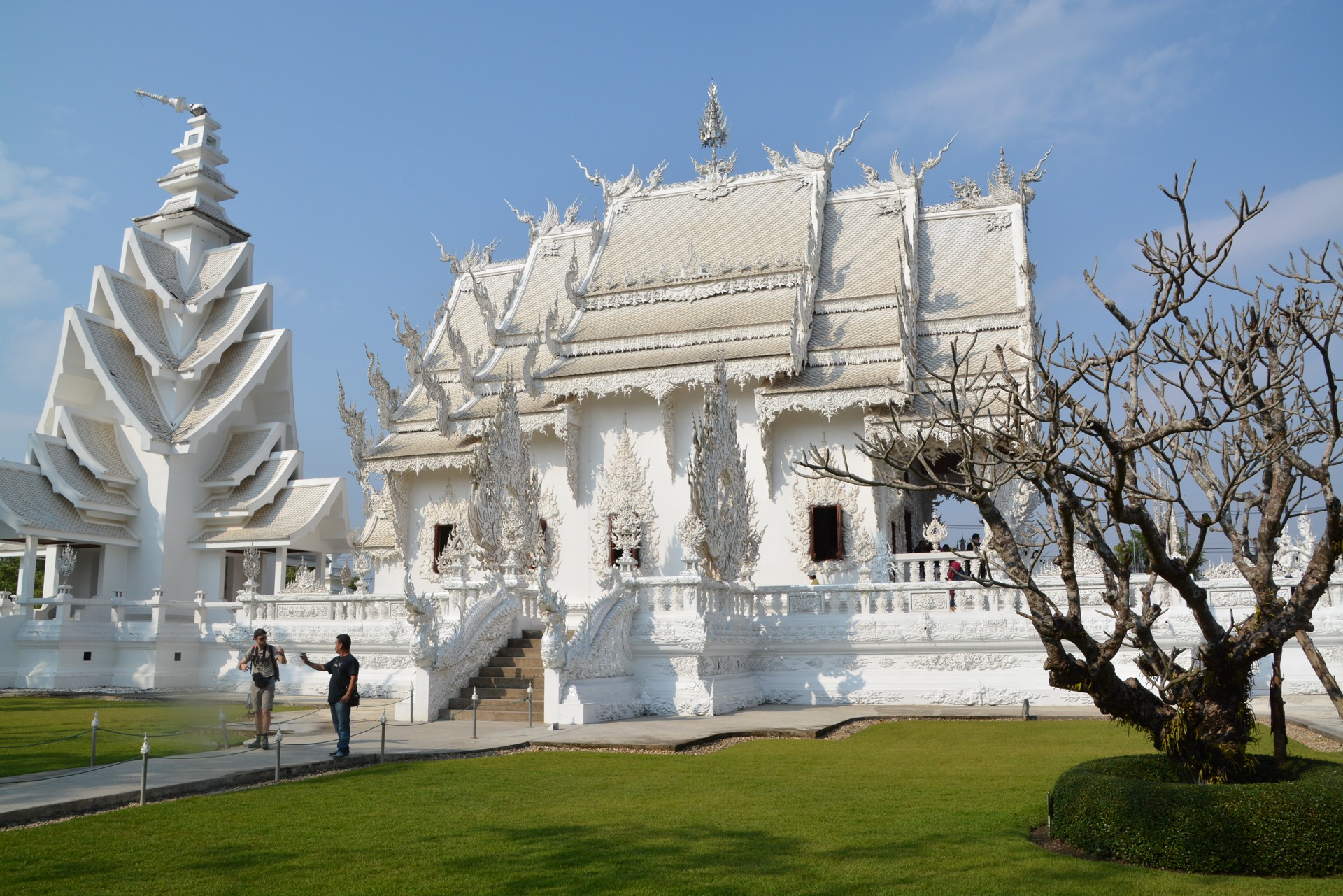
Wat Rong Khun, better known as the "White Temple," is located about 13 km from the center of Chiang Rai. With its pristine architecture, mirrored fragments, and sometimes surprising references to popular culture, it has become one of Thailand's most recognizable landmarks. But its appeal goes beyond its appearance: every detail of the complex embodies a piece of its creator Chalermchai Kositpipat's vision.
I first discovered it in 2008, and then I had the opportunity to interview Chalermchai Kositpipat in 2011, when I was still working in audiovisual production. Since then, the site has continued to evolve. In this article, I revisit its history and symbolism, while also gathering useful information to help you plan your visit: prices, opening hours, and access from Chiang Rai.
The origins of Wat Rong Khun
Wat Rong Khun, better known as the White Temple, is a unique work conceived by Thai artist Chalermchai Kositpipat, a native of Chiang Rai.
Already at the peak of his career in the mid-1990s, Chalermchai wanted both to pay homage to King Bhumibol (Rama IX) and to offer an exceptional attraction to his hometown. The project began in 1996 on the ruins of an ancient temple, blending his personal ambition with an artistic and spiritual quest.
More than just a place of worship, the White Temple is a work of art in its own right, where traditional Thai architecture blends with bold contemporary elements. Every detail, from the sculptures to the frescoes, illustrates Buddhist principles such as karma and enlightenment, while incorporating surprising references to popular culture and the issues of our time.

A monumental ambition
Through Wat Rong Khun, Chalermchai helped put Chiang Rai on the international stage, in a region that was still struggling to recover from the conflicts surrounding the opium trade in the Golden Triangle. Today, the temple is one of Thailand's most iconic and visited sites.
This monumental project represents a colossal challenge, both artistically and financially. Chalermchai has already invested more than 40 million Baht (more than a million euros) of his personal fortune, while refusing large funding, particularly from the state, to preserve his creative independence. He estimates that the complex will not be completed until 2070, making Wat Rong Khun a work in perpetual evolution.

Challenges and Legacy
In 2014, a major earthquake nearly compromised this masterpiece, causing significant damage. This event caused great emotion in Thailand, as the temple has become a national symbol. Fortunately, after two years of work, the structure was consolidated, and the temple was able to fully reopen, thus continuing its role as an artistic and spiritual jewel.

Long free to access, the site now requires a fee. This decision, made by the management committee, aims to improve the infrastructure to accommodate the many visitors and ensure the upkeep of the complex after the passing of its creator. Despite this change, the artist remains true to his original vision: to make Wat Rong Khun a place of Buddhist learning and meditation, far beyond its function as a mere tourist attraction.
Architecture and symbolism of the white temple
In order to understand a little about what surrounds you, I will discuss here the symbolism behind the statues and figures that many will find just "amusing", but without grasping the hidden message behind them.
First of all, it is important to understand that the temple's distinctive whiteness, for which it is famous, symbolizes the purity of Buddhism. It is this same purity that is represented by the white in the Thai flag (with blue for royalty, and red for the people).
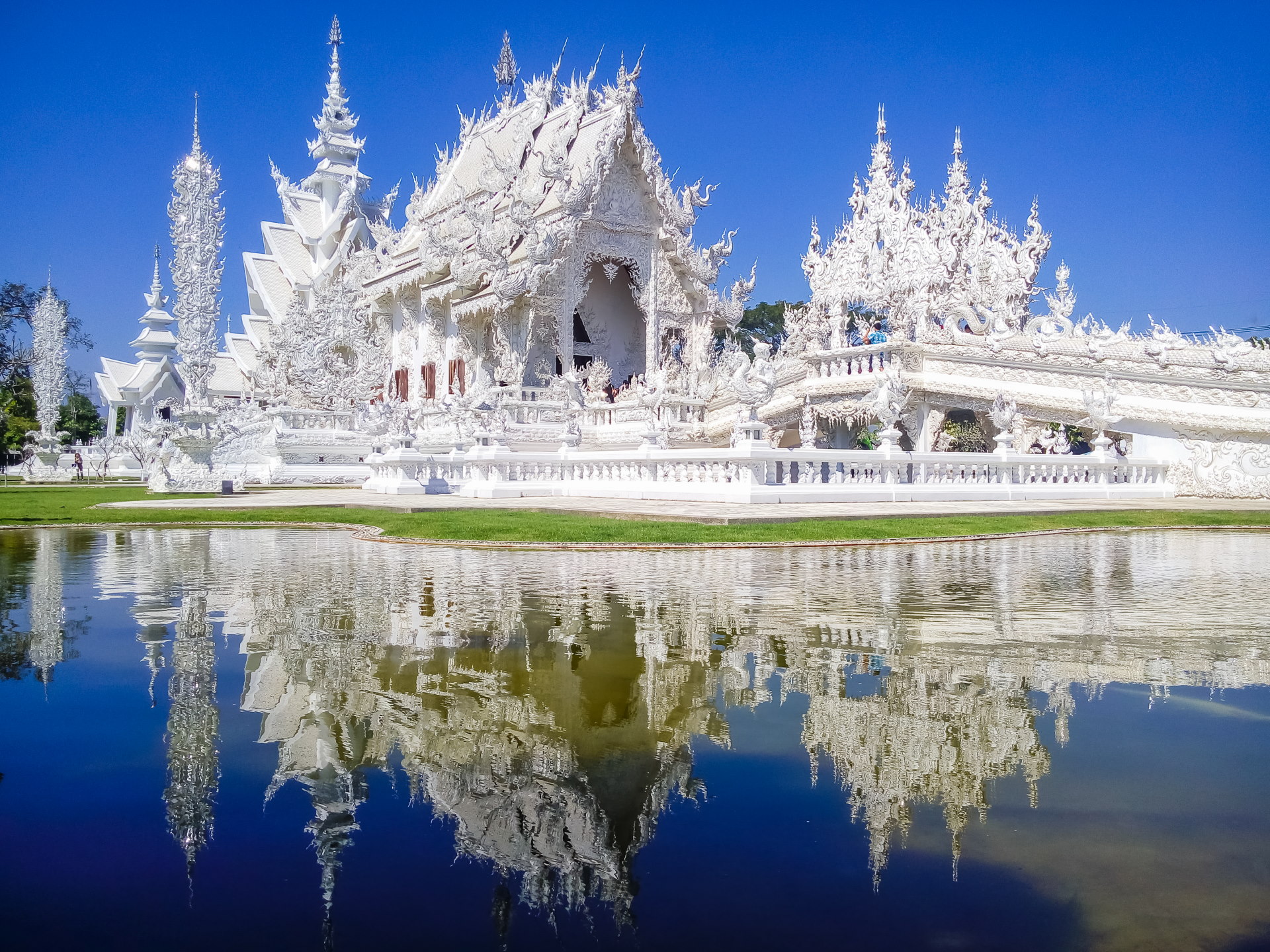

Chalermchai Kositpipat, its creator, wanted to design this place as an earthly incarnation of paradise, a spiritual refuge inviting humans to rise above material concerns.
Behind the fascinating and sometimes disconcerting sculptures, there is actually a deep reflection by the artist, mixing tradition and modernity. However, the temple is not limited to classical Buddhist symbols; and in order to reach a wide audience, it deliberately integrates surprising references to contemporary popular culture.
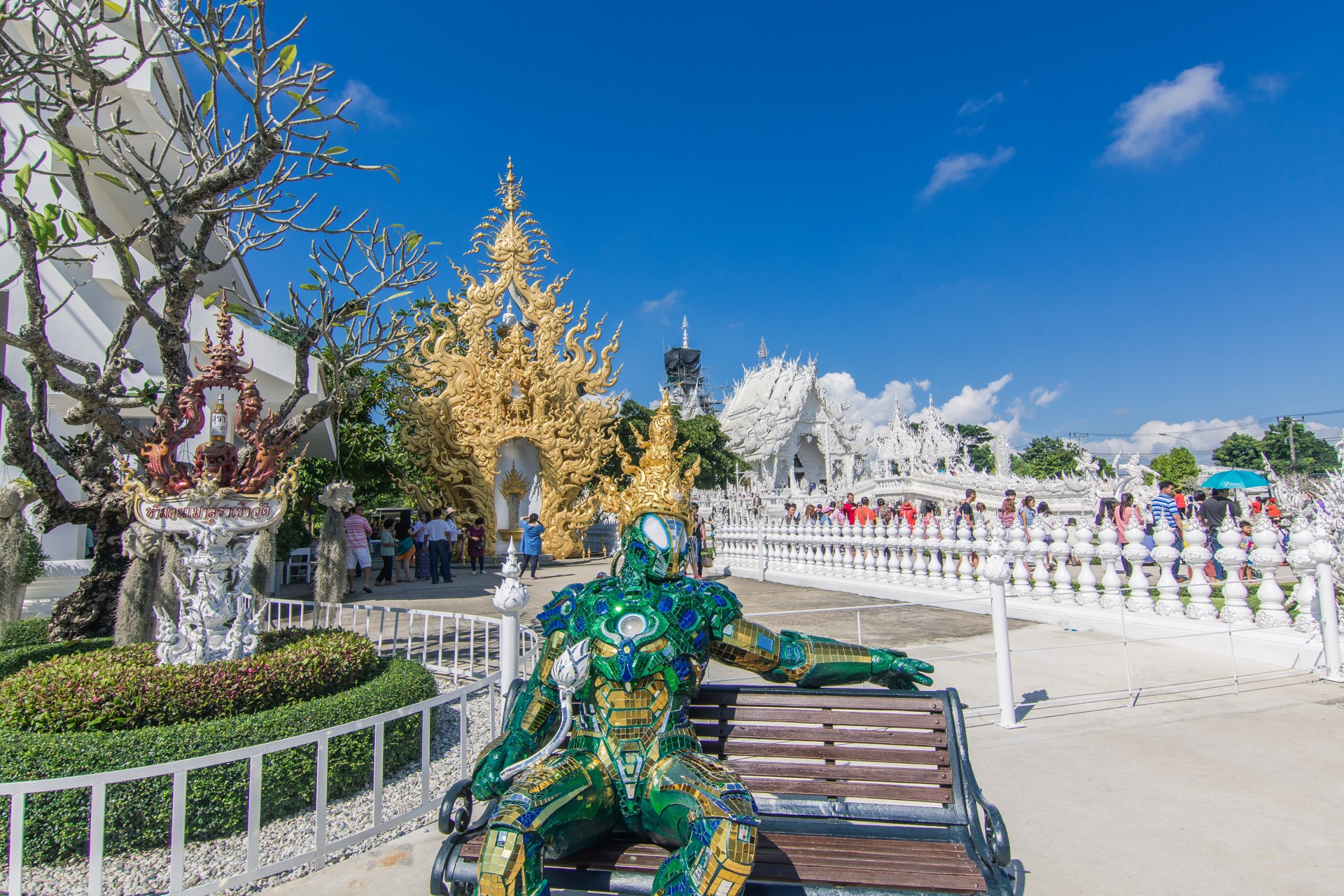
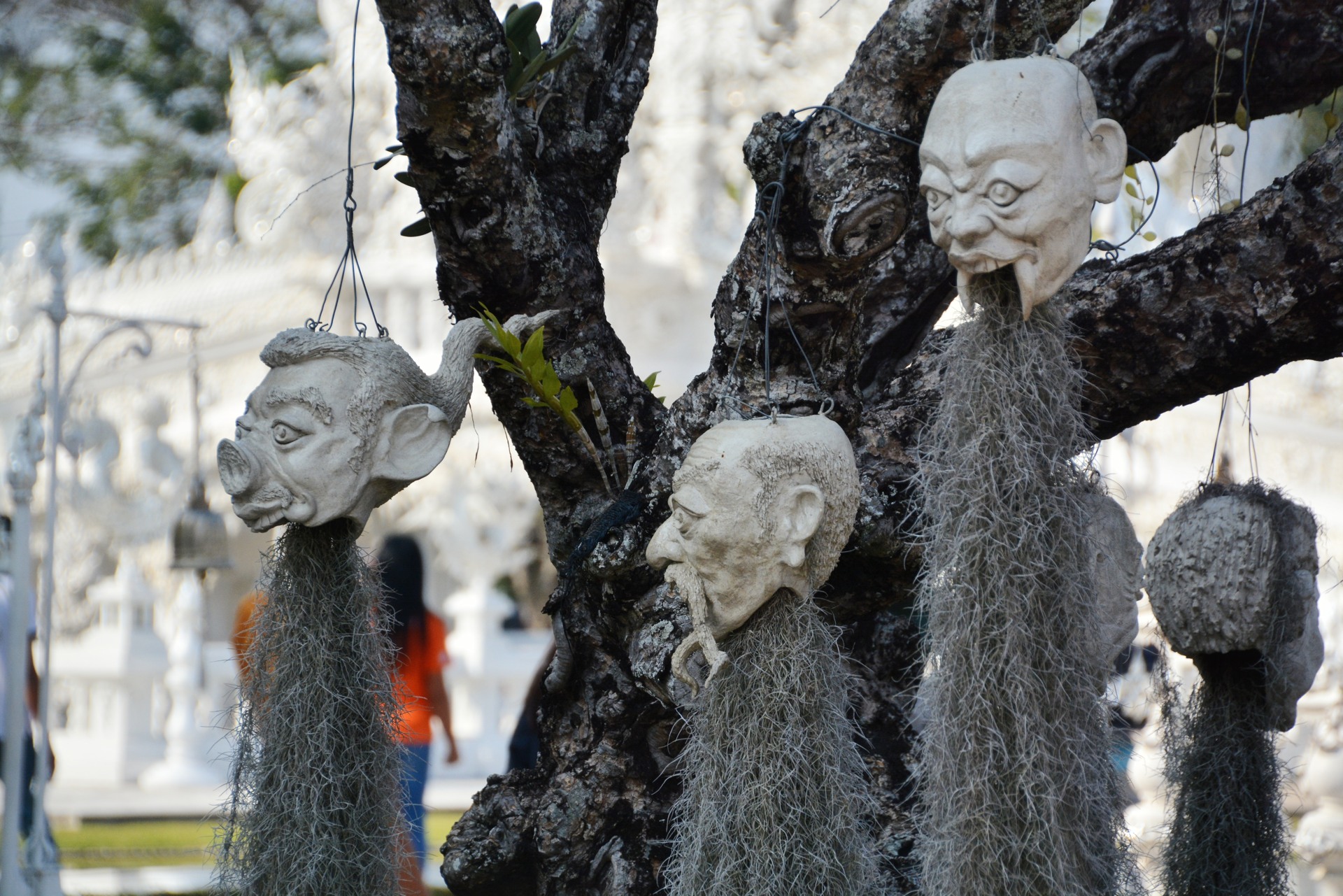
This is why you will see, for example, pots hanging in trees bearing the faces of iconic Hollywood movie characters – heroes and villains alike.
Inside the main chapel, where photography is prohibited, visitors discover a striking fresco blending historical, heroic, and catastrophic figures. Superman, Neo from The Matrix , and Alien appear alongside depictions such as the burning Twin Towers of the World Trade Center.

Every detail illustrates humanity's struggles against the destructive forces of ego, desire and greed. The artist continues to add characters as the films are released, constantly evolving his work.
The temple, in its entirety, is conceived as a spiritual journey. The sculptures, frescoes and walkways symbolize the quest to escape worldly temptations and focus on what is essential: the mind. Chalermchai thus invites each visitor to reflect on Buddhist teachings and find their own path to enlightenment.
Finally, last little bit of information, you will notice that the temple and the structures decorating it are covered with small pieces of glass similar to mirrors. They represent the wisdom and teachings of the Buddha, radiating throughout the universe.

The bridge of the “cycle of rebirth”
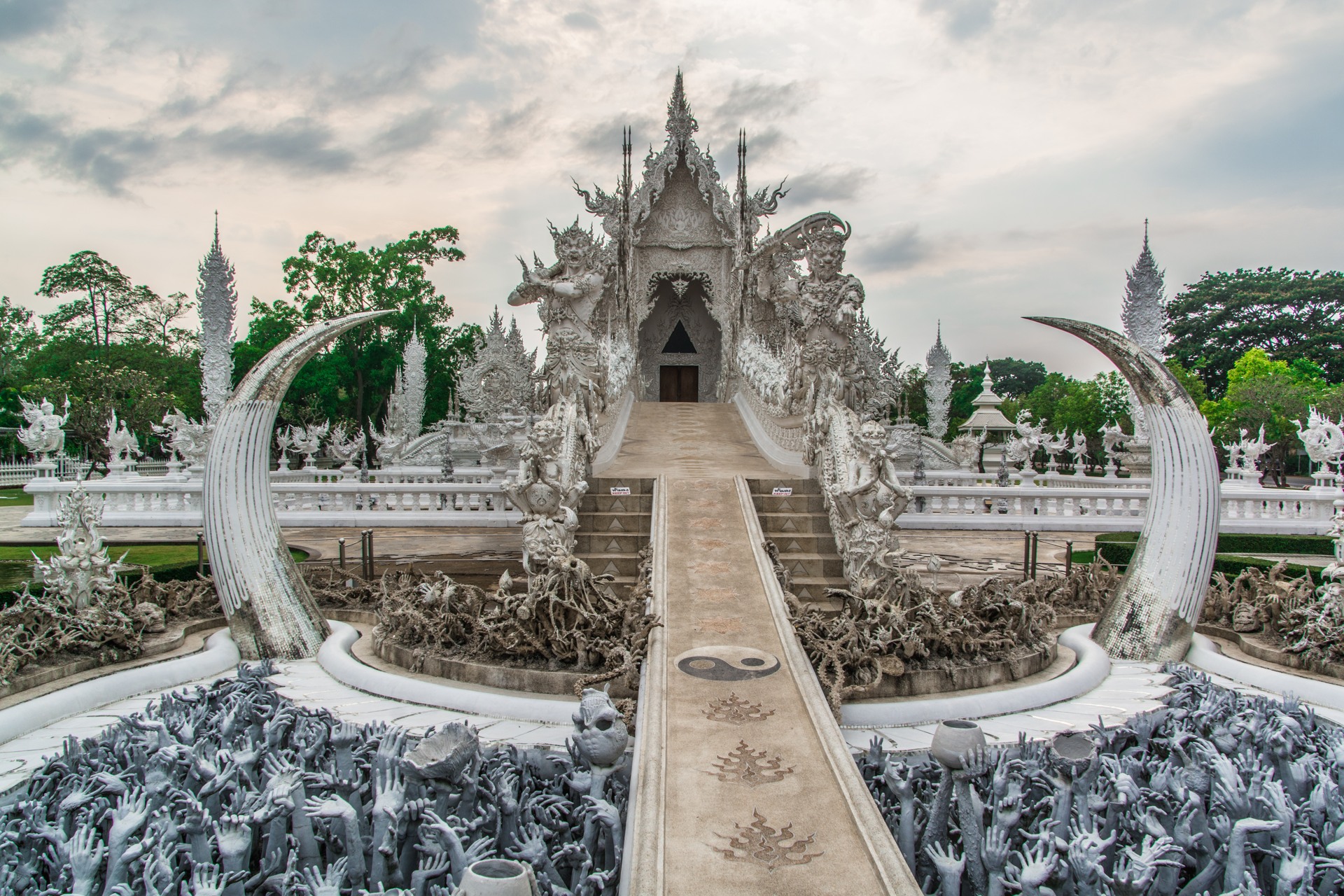
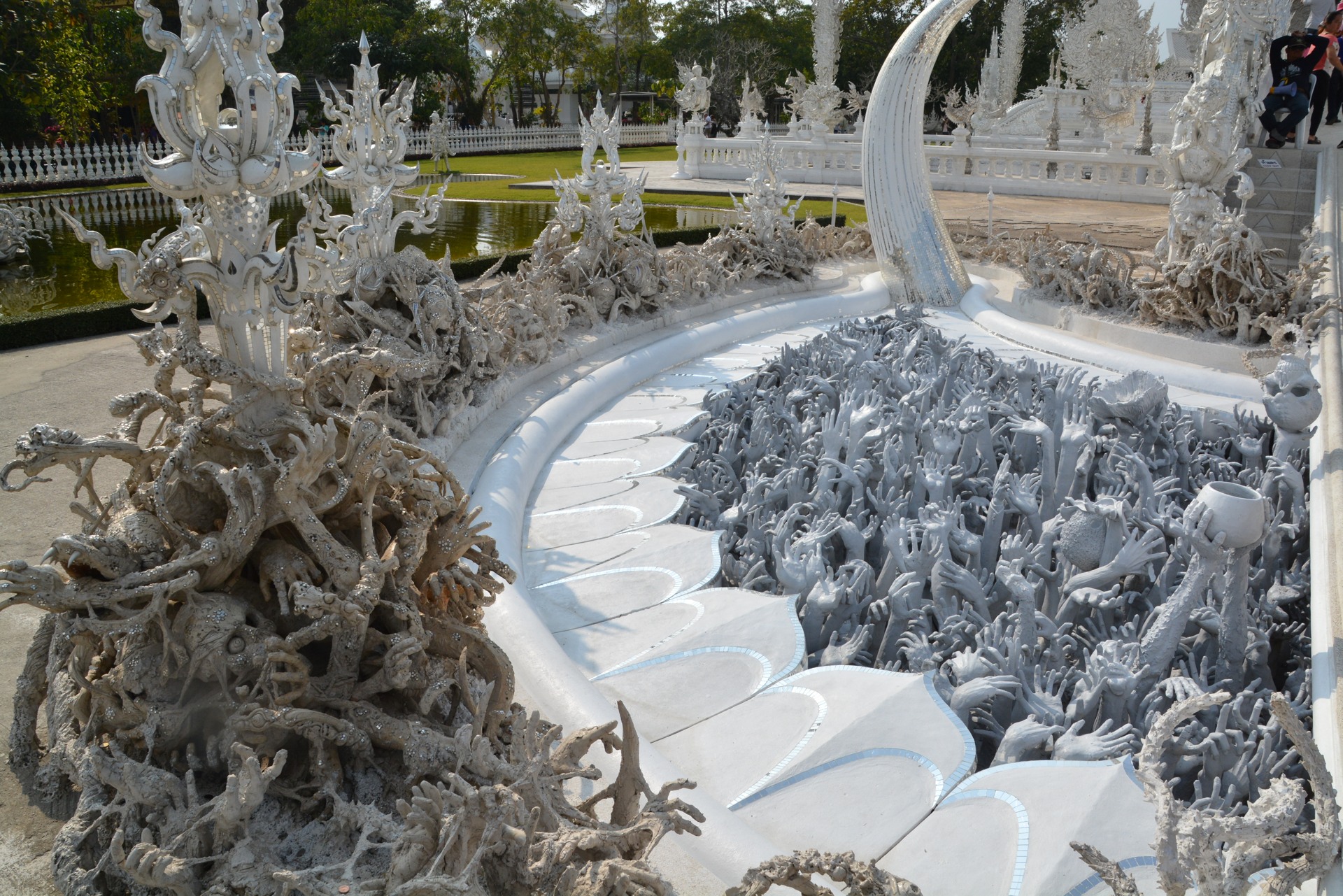
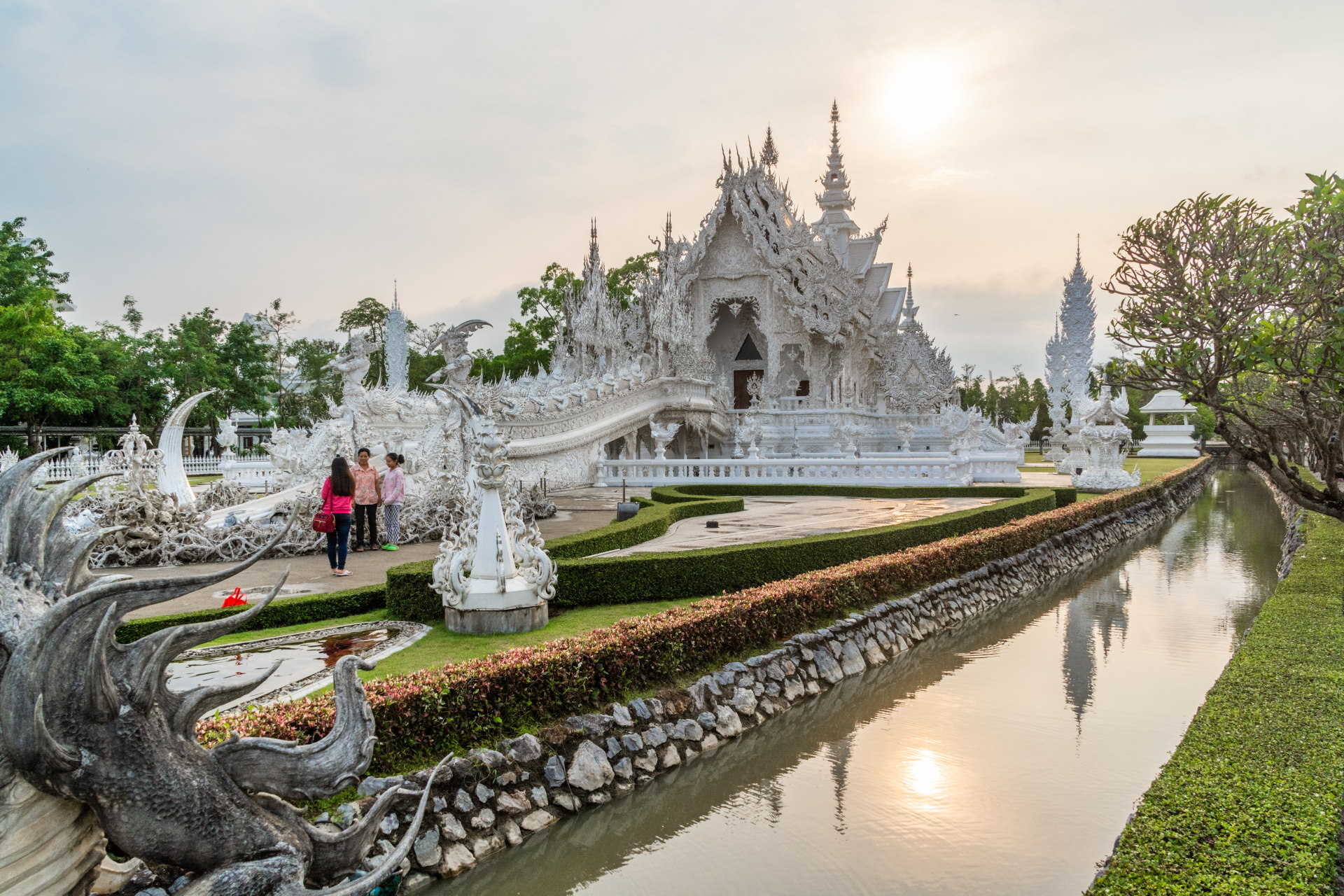
To reach the Ubosot, the main building of the White Temple, one must cross a unique passage, loaded with symbolism. Around this bridge, skulls and hundreds of hands stretched out towards the sky seem to emerge from the depths, evoking insatiable desire and human suffering, symbols of hell and earthly torments.
This "bridge of the cycle of rebirth" represents the passage out of the cycle of death and reincarnation. It invites us to overcome temptations and greed to achieve an existence free from suffering, thus beginning a spiritual path towards purity and awakening.
The "Gate of Heaven"
After crossing the bridge symbolizing the crossing of earthly sufferings, the visitor finds himself facing what is called the "gate of paradise". It is guarded by two imposing mythological creatures: Death and Rahu. These two powerful figures embody the judgment and destiny of Men, deciding their fate after death according to their past actions.
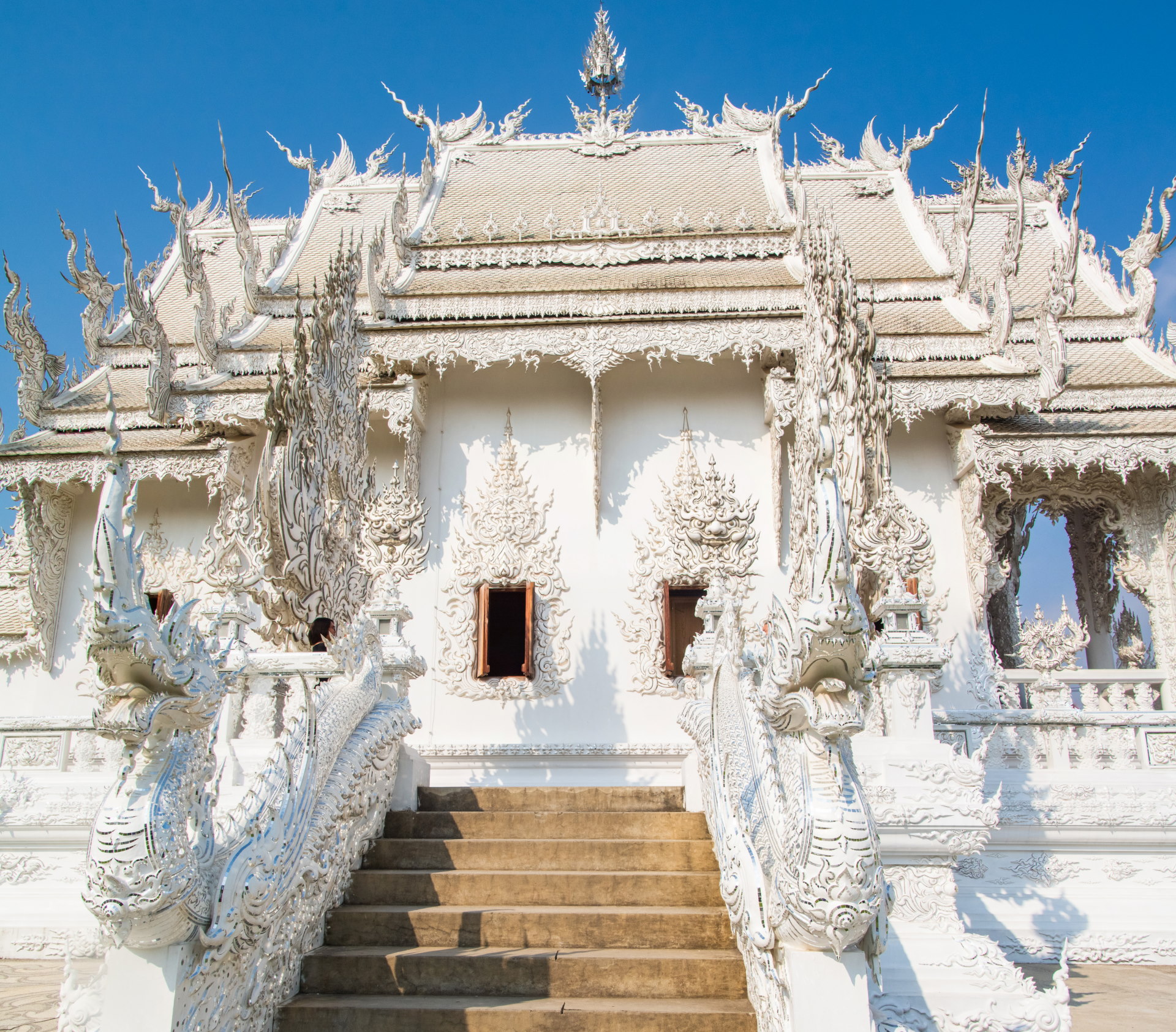
Before entering the main building, you walk along a bridge surrounded by classical Naga figures on each side. Looking around, you will notice several representations of Buddha in meditation positions, symbolizing serenity and the attainment of enlightenment, a subtle reminder of the ultimate goal of Buddhist spirituality.


The Ubosot
The most important building at Wat Rong Khun, the Ubosot or ordination hall, is an all-white building with fragments of reflective glass in the plaster. The Ubosot takes design elements from classical northern Thai temples, such as the three-tiered roof.
While usually the murals inside depict scenes from life related to the story of Buddha, here we find colorful patterns, and characters like those mentioned above, which are a modern representation of good and evil.
At the back, in the usual location, you will have a statue of Buddha in a sitting position. The variation is that you will also see a wax statue of a monk in a meditation position, amazingly realistic.

Other structures of the White Temple
Of course, the White Temple is not limited to the Ubosot. While exploring the site, several other buildings and features are worth paying attention to. Before talking about specific places, it is difficult not to mention the gardens that surround the main building. With its ponds, small bridges and structures still being decorated, the site exudes a very photogenic atmosphere.
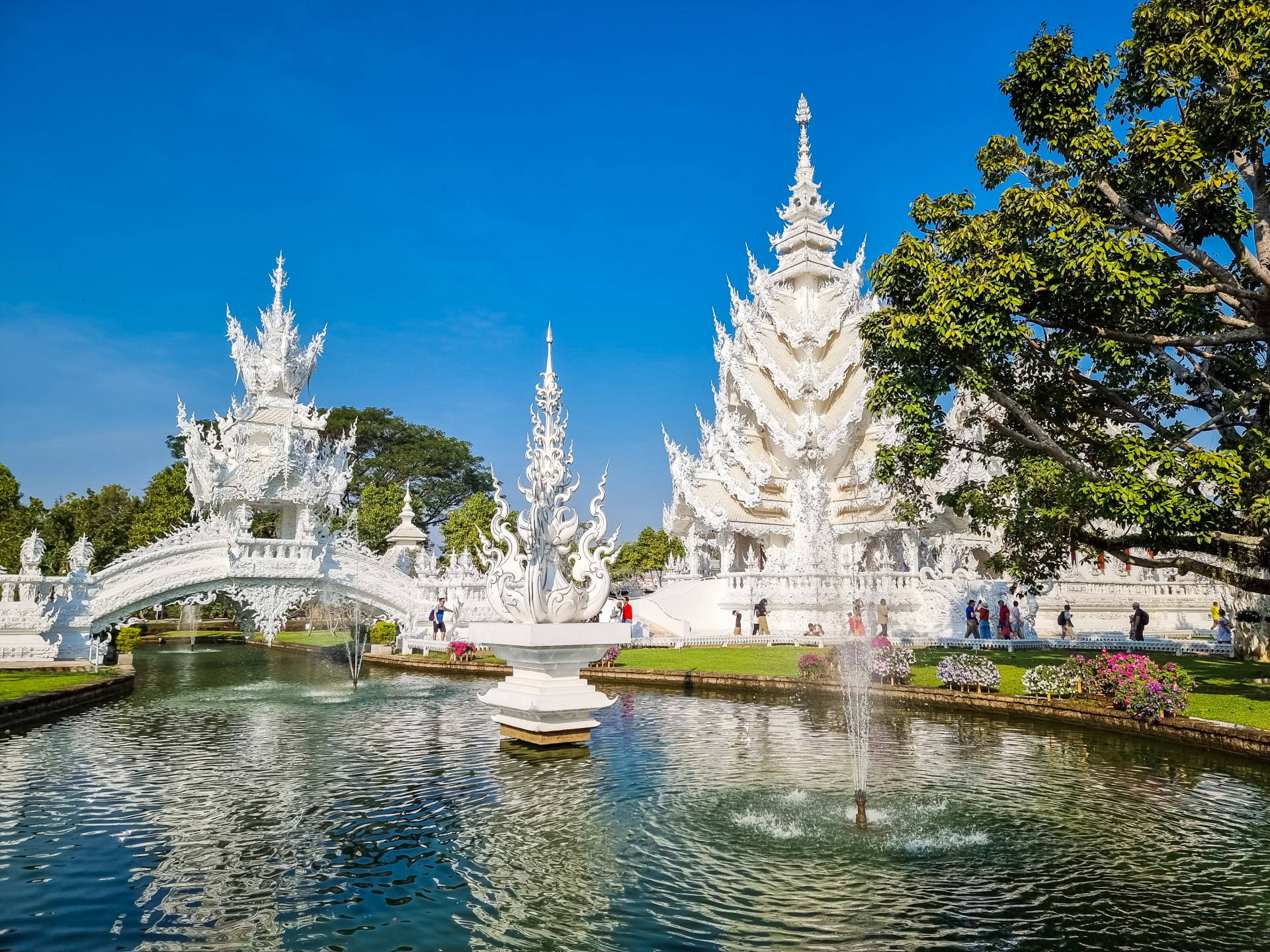
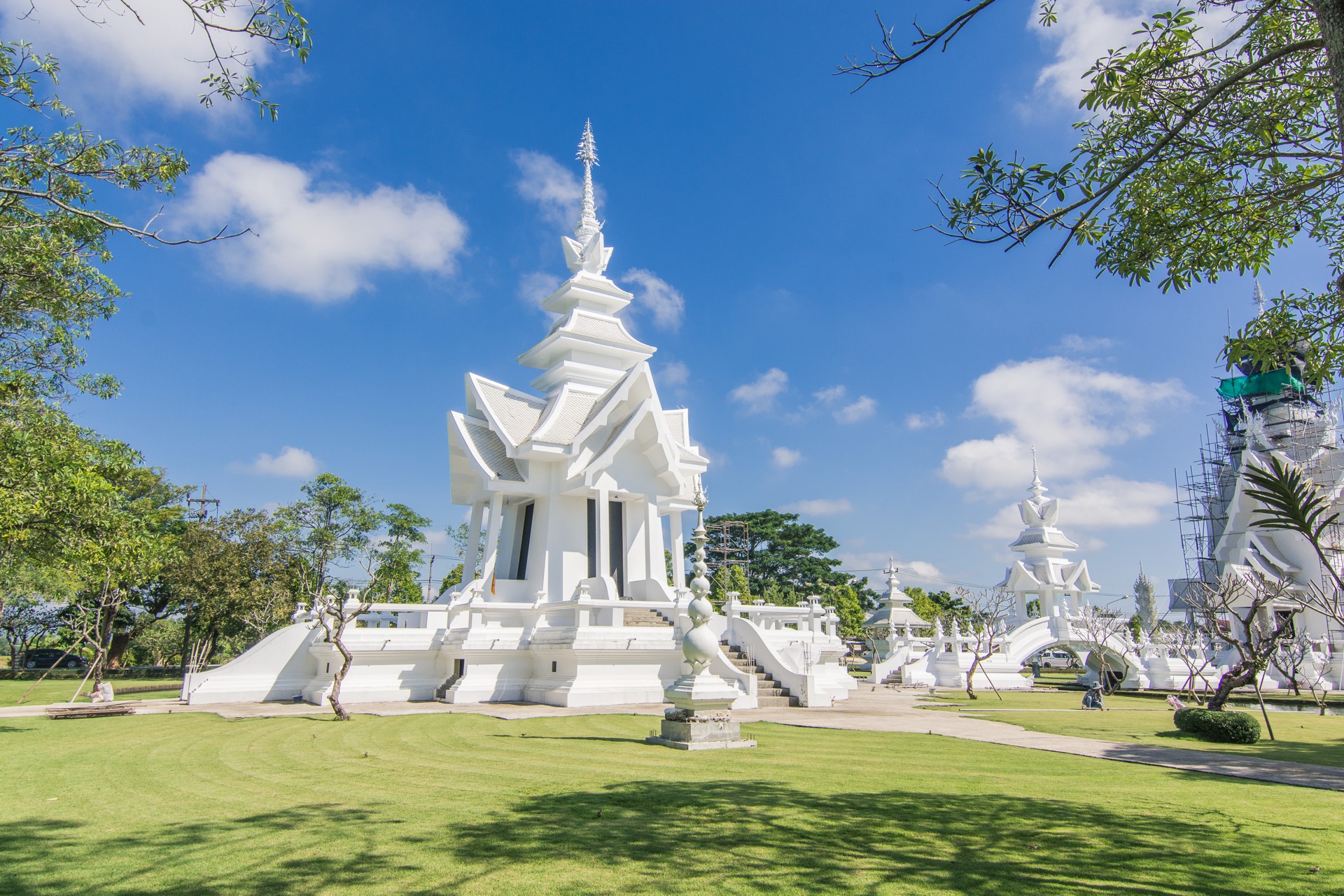
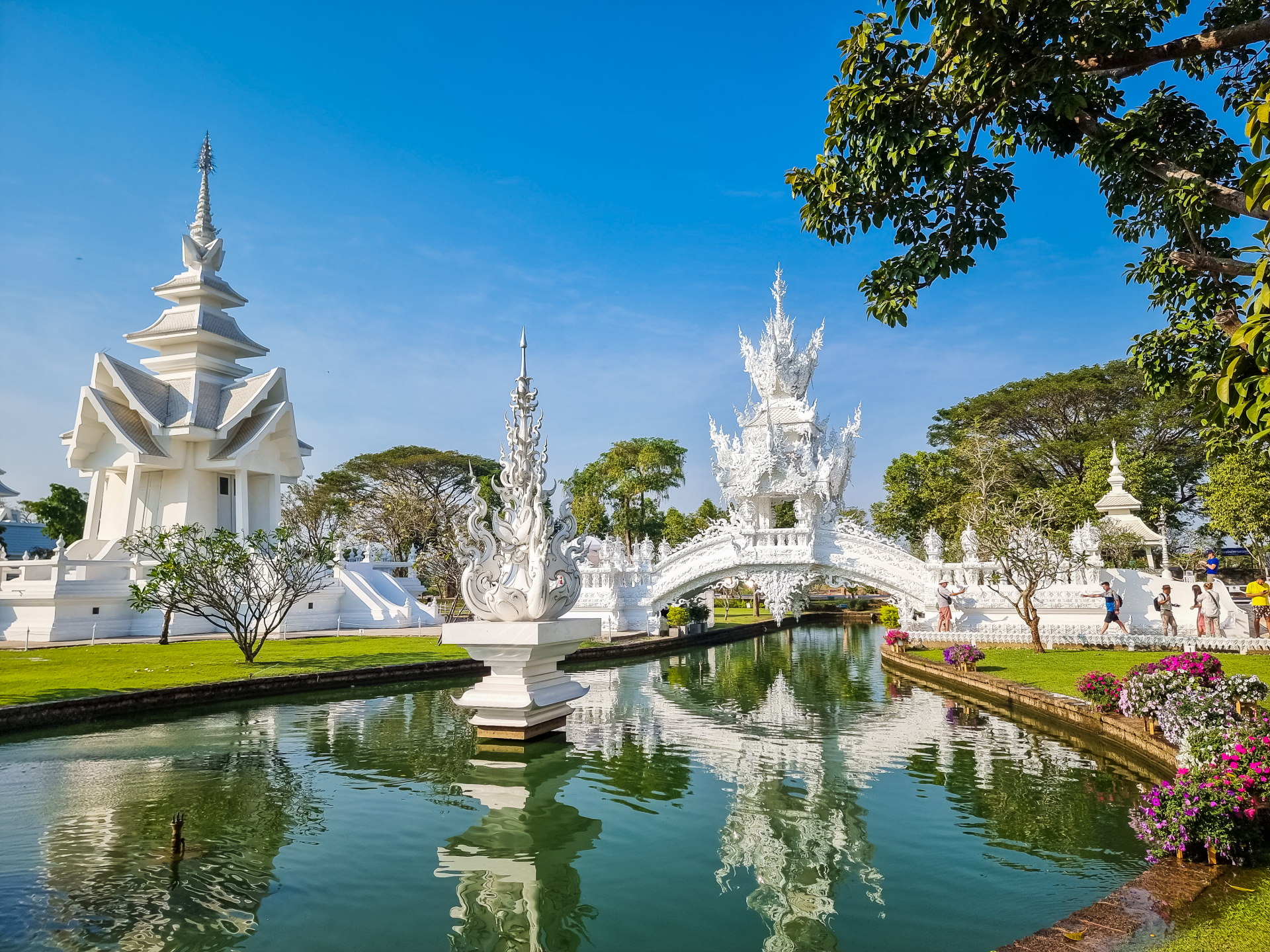
Artist Chalermchai Kositpipat continues to perfect his work (although he now only supervises from afar, as he is officially retired) and each visit can reveal new sculptures or unexpected additions. If you are lucky enough to return after a few years, you will be able to see for yourself how the place has evolved.
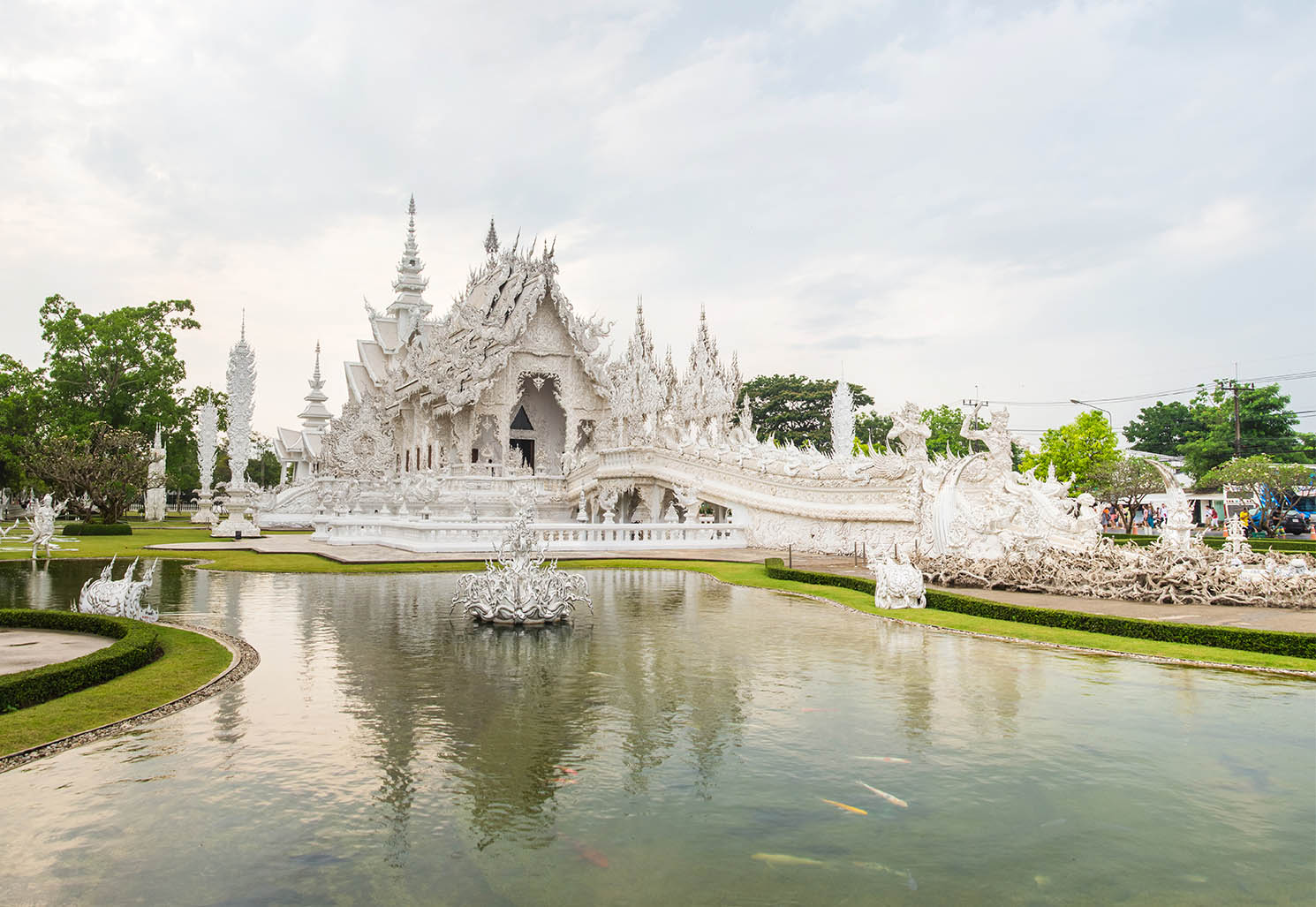
A concrete example? Compare the following two photos: although the angle is different, the bridge you see is indeed the same, but the details have been enriched over time.
The Golden Building
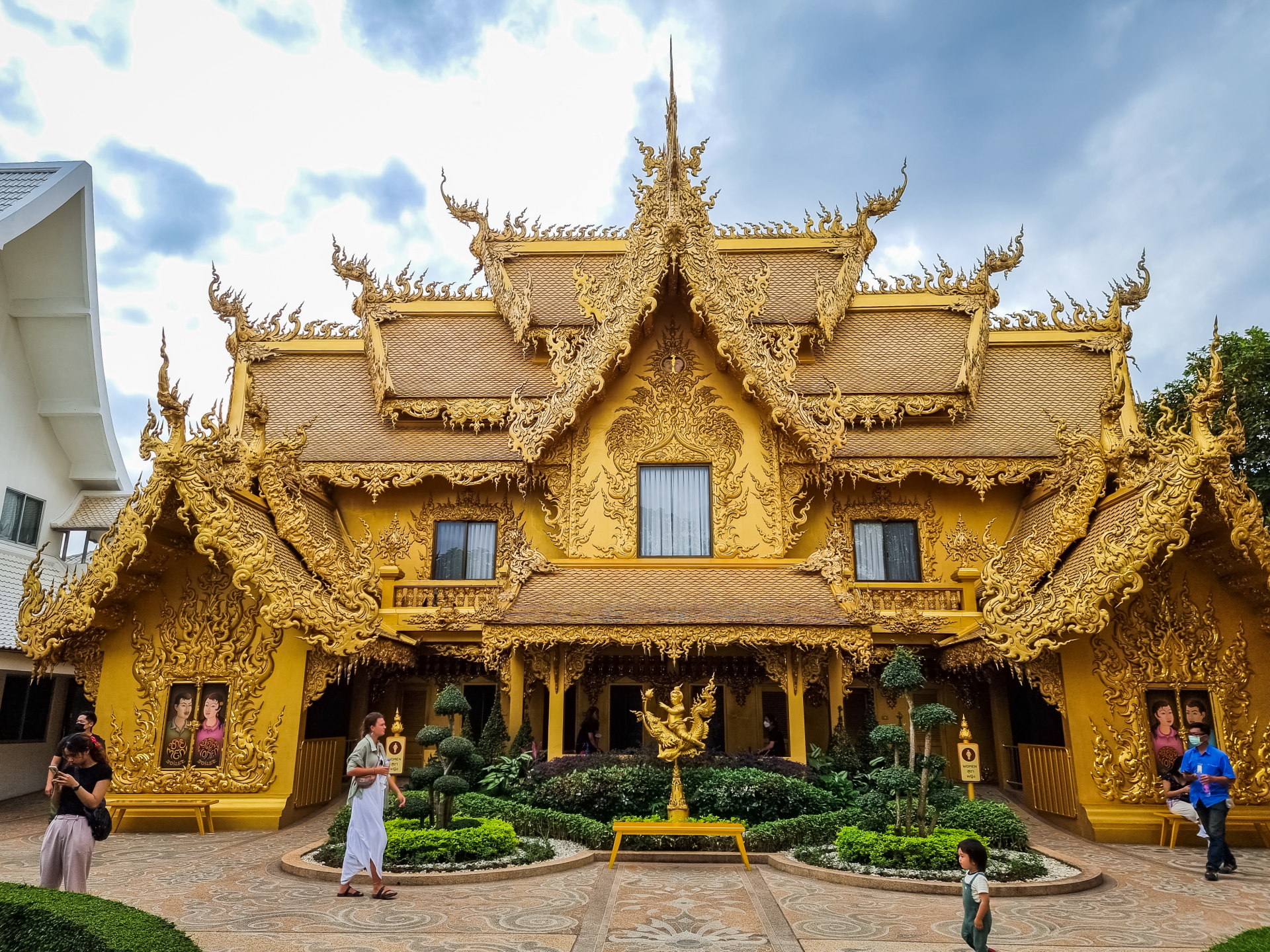
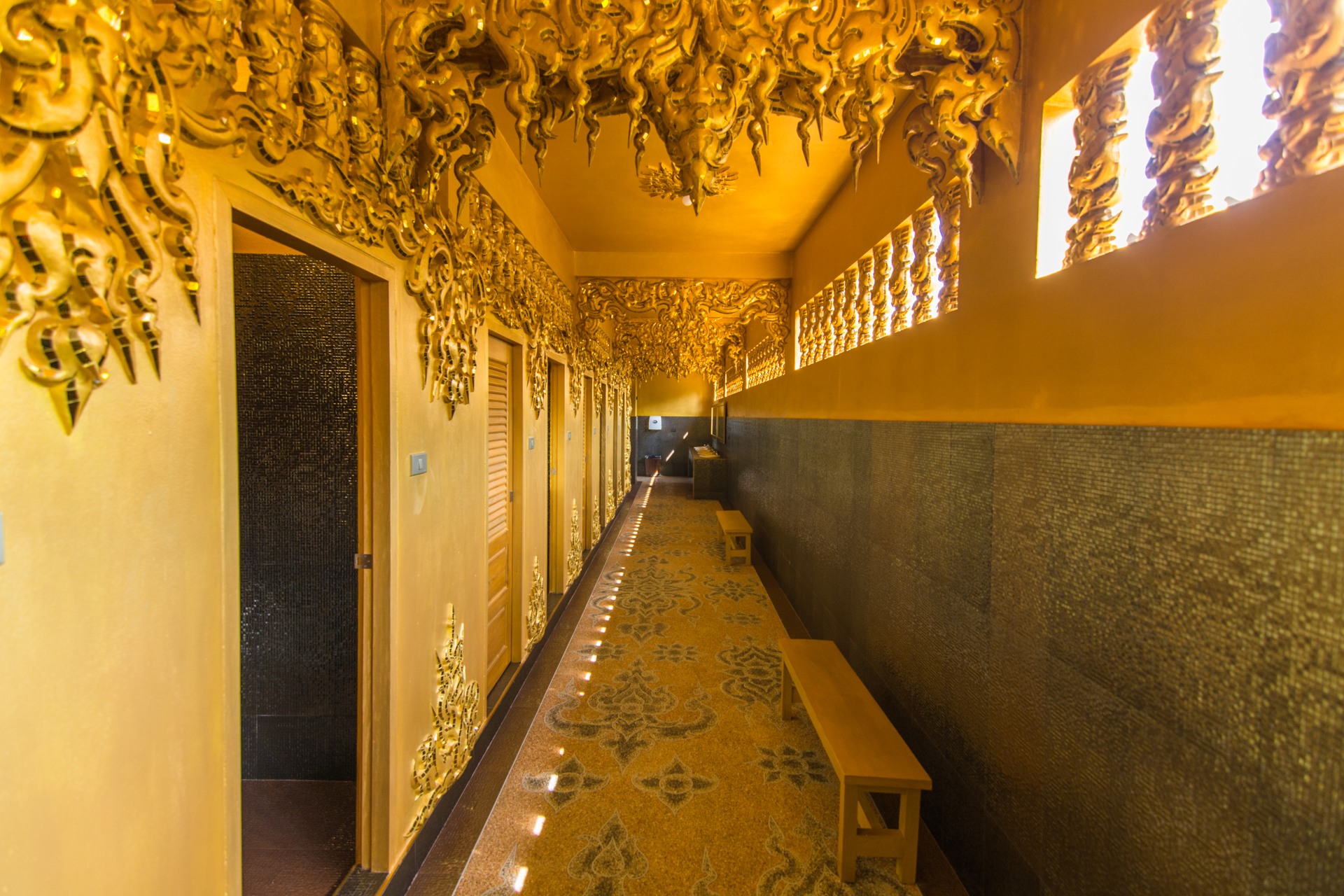
Right next to the Ubosot, it’s hard not to notice a resplendent building, all dressed in yellow. And while that’s not all it is, it probably houses the most elegant toilets in Thailand! Yes, you read that right, it’s primarily a building dedicated to that purpose.
But here again, everything has a meaning. If the white Ubosot symbolizes the spirit, this golden building represents the body. According to his interpretation, its golden color embodies the human obsession with futile desires and the quest for wealth. In contrast, this structure also invites us to refocus on the spirit, rather than on material possessions.
Something to think about for a few moments during your… philosophical break.
The wishing well and the donation trees
While exploring the site, you're bound to come across a group of visitors huddled around a covered platform: this is where the wishing well is located , an attraction that intrigues both children and adults. The idea? Make a wish by tossing a coin and hope it lands precisely in the center of the well, where a lotus-shaped structure rests underwater. A more delicate task than it looks!
But it is not just a game: while the act of throwing a coin into a fountain or a well to attract good fortune is common in many cultures, Chalermchai Kositpipat, faithful to his symbolic approach, uses the latter to subtly denounce human greed.

Around the well, you'll also notice "trees" adorned with golden leaves , suspended here and there, including from the ceiling of the covered walkway that runs alongside the garden surrounding the Ubosot. Looking more closely, you'll see that each leaf bears a name, a date, or sometimes a wish left by a donor. A nearby kiosk will also allow you to contribute to the preservation and development of the temple, beyond the cost of your entrance ticket.
When you know that each hanging gold leaf represents a donation of 30 Bahts , and that they accumulate by the thousands (despite regular removals to make room), you quickly realize the importance of this collective participation!

Cave of Art
The Cave of Art is a more recent addition to the Wat Rong Khun complex. As you walk towards the back of the site, you'll notice a wall resembling natural rock, surrounded by lush vegetation, over which small waterfalls cascade. This intriguing setting houses an artificial cave that can be visited.
From what I've read, the cave's interior offers an immersive experience that begins with a depiction of hell, before guiding visitors to a more "paradisiacal" section, surrounded by Buddha statues and accompanied by soothing light displays. However, I've never visited this space, and for good reason: access to the Cave of Art requires an additional 50 baht , not included in the Wat Rong Khun entrance ticket. Personally, I'm a little hesitant to pay extra for an attraction within an already paid attraction.
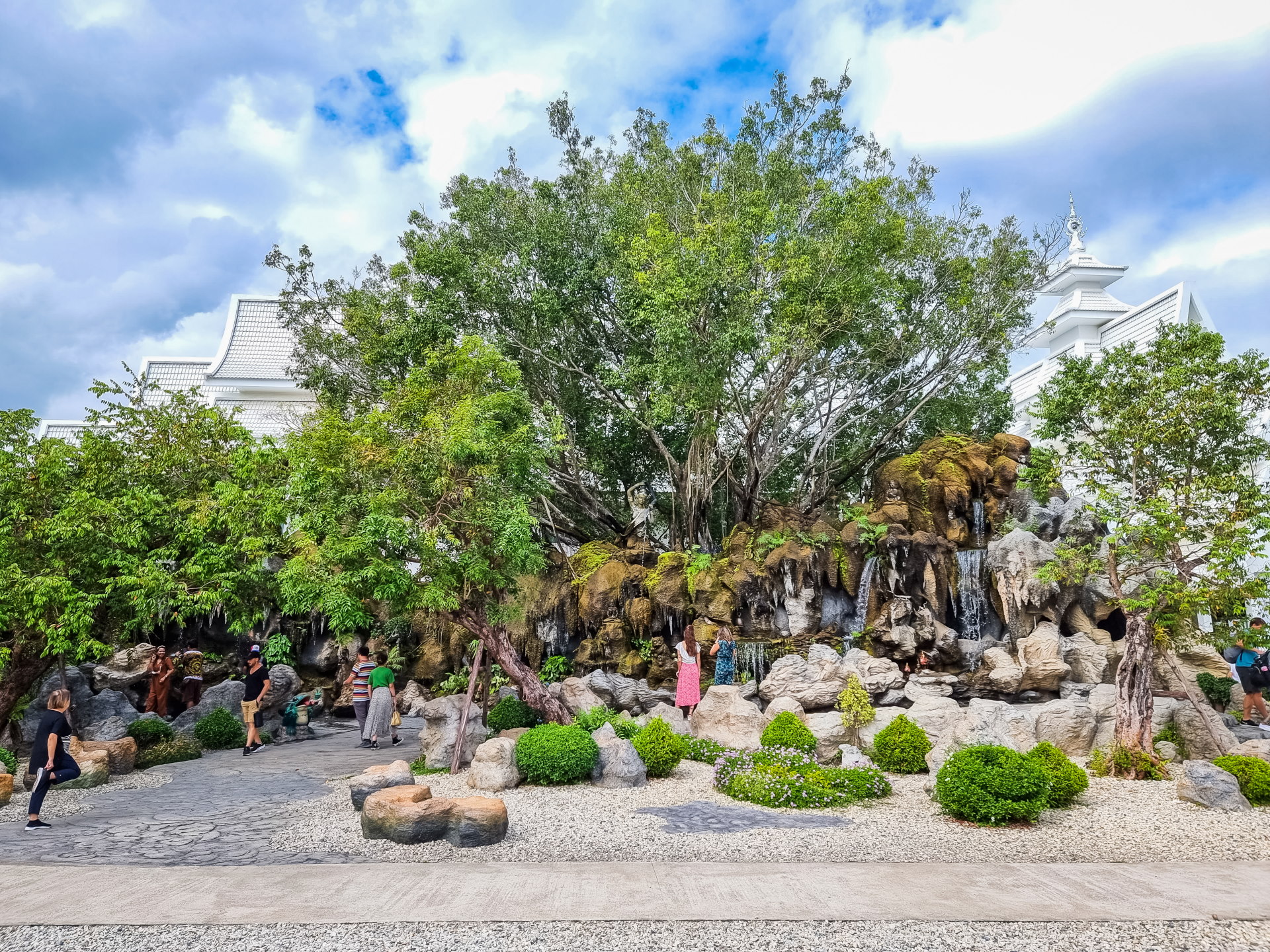
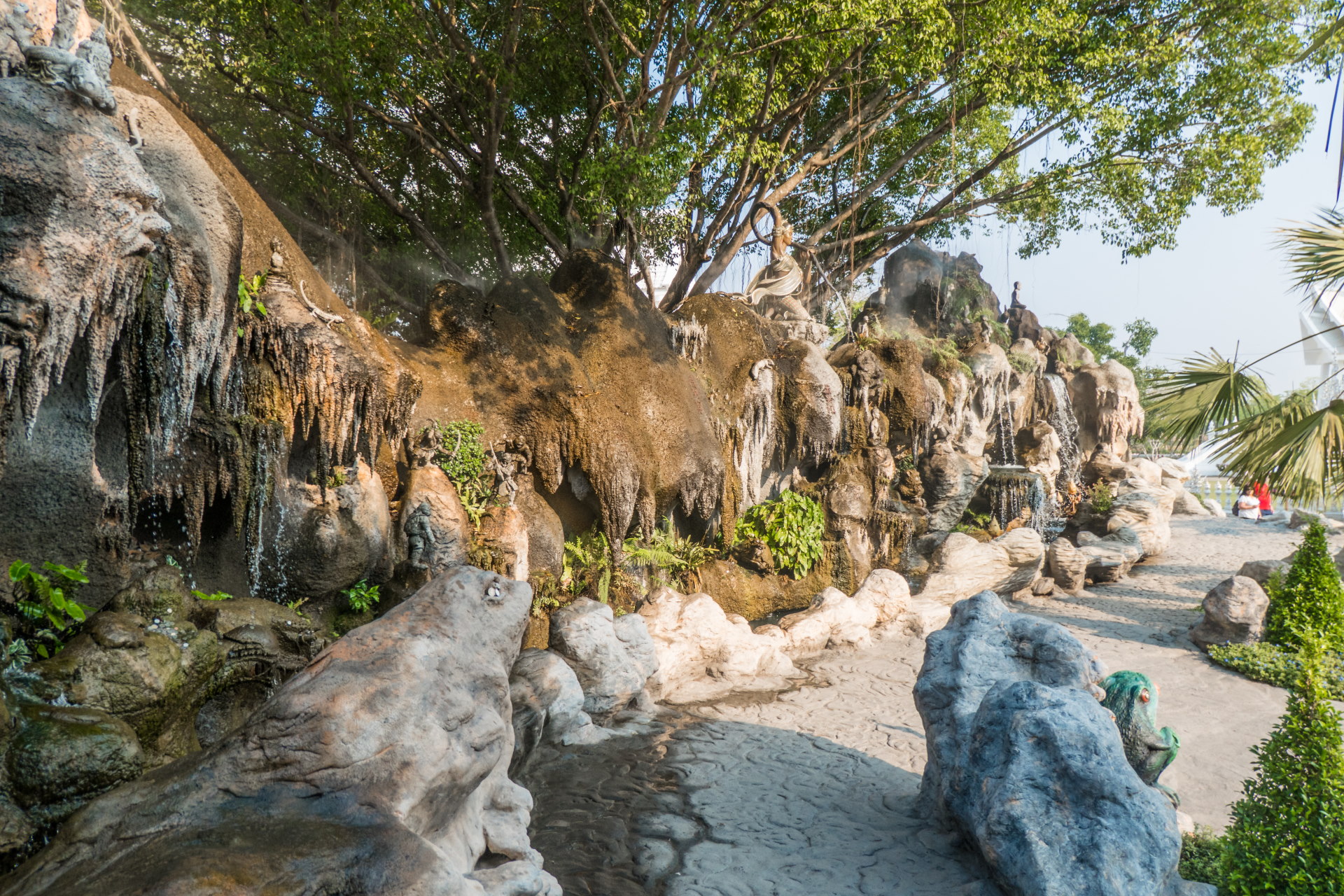
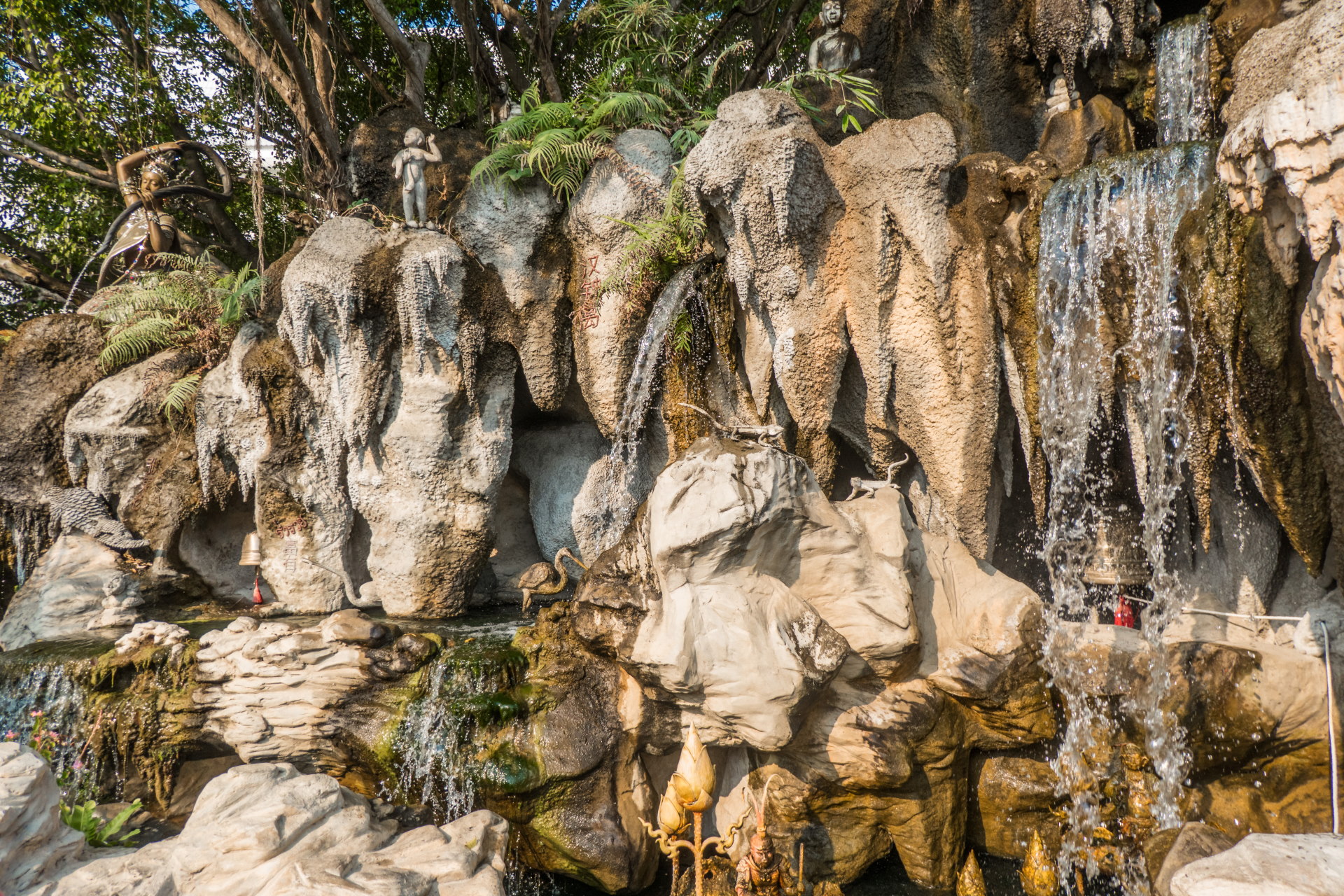
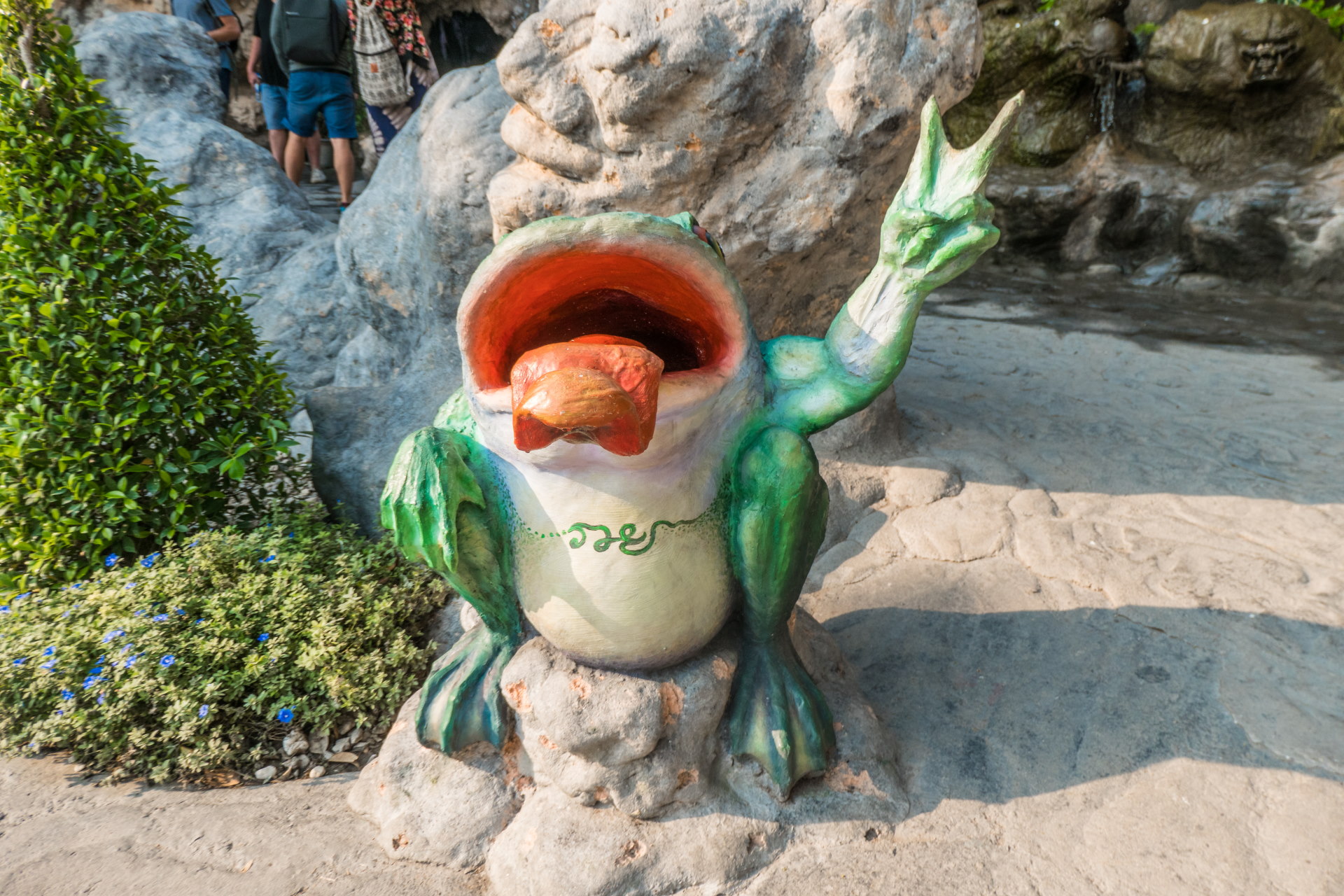
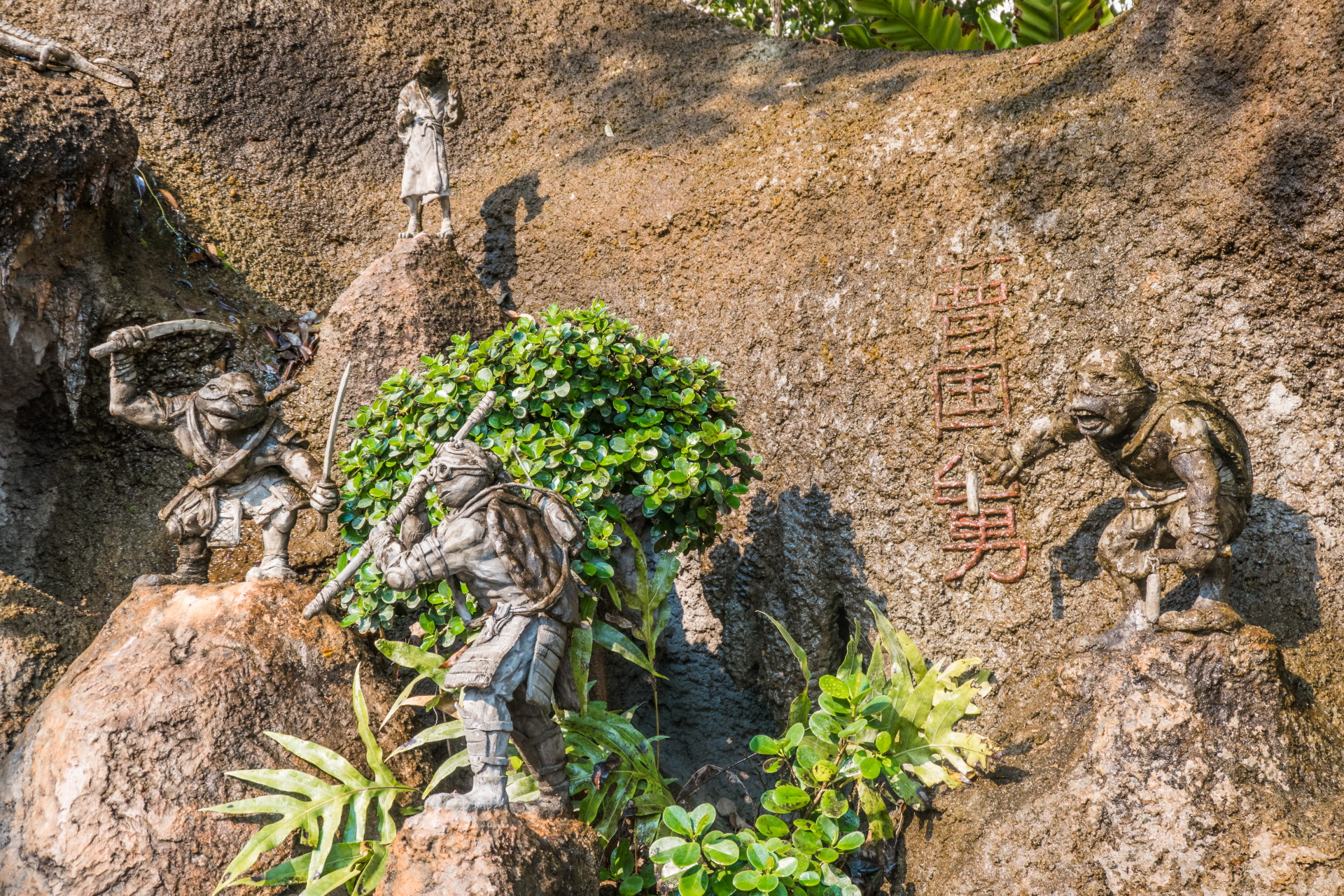
That said, feel free to take a look. You can see it as an additional donation to the art project. But even without entering, the exterior of this area is enough in itself: the external walls are decorated with surprising characters, mixing figures from Thai culture with pop culture icons, such as the Ninja Turtles or Venom.
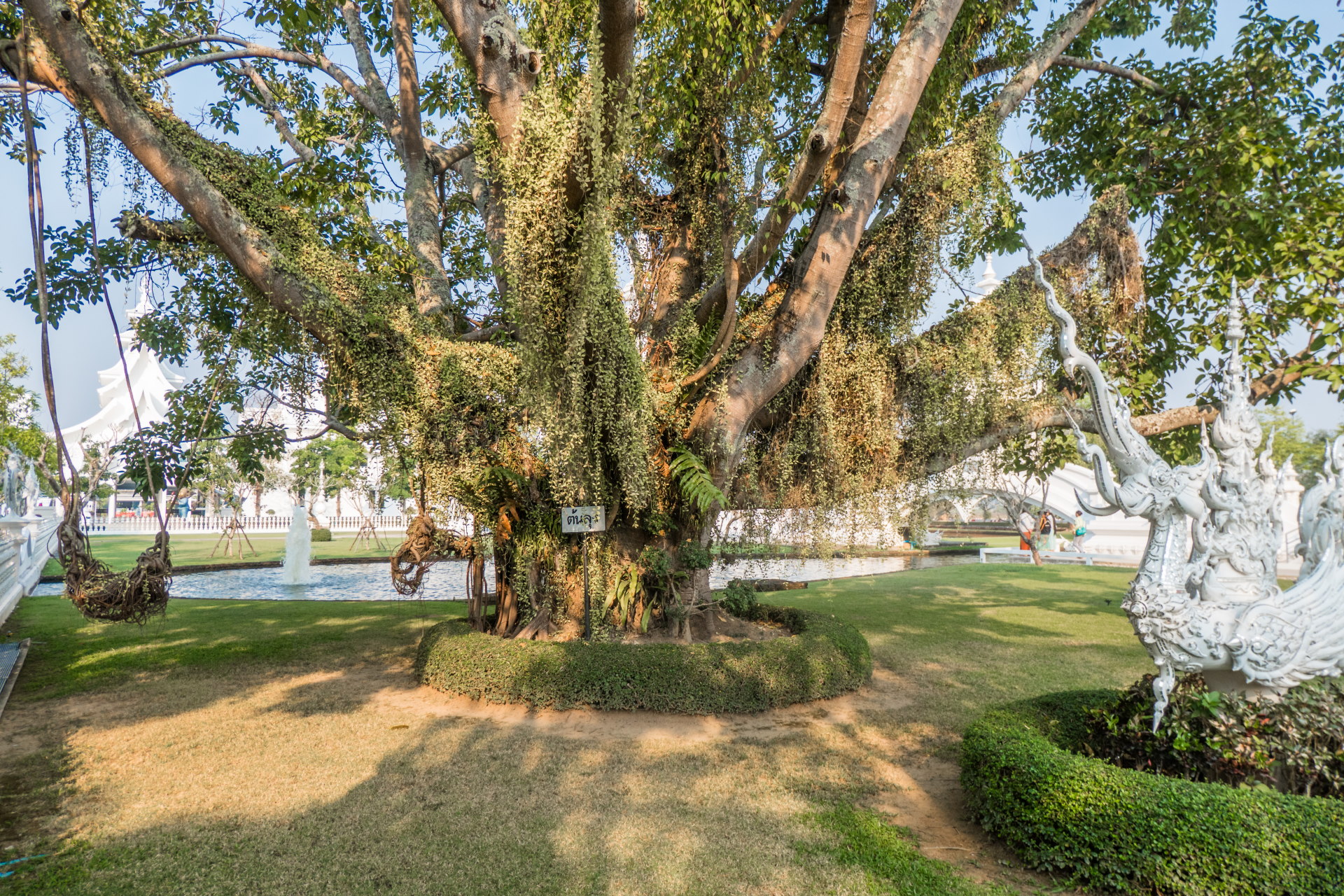
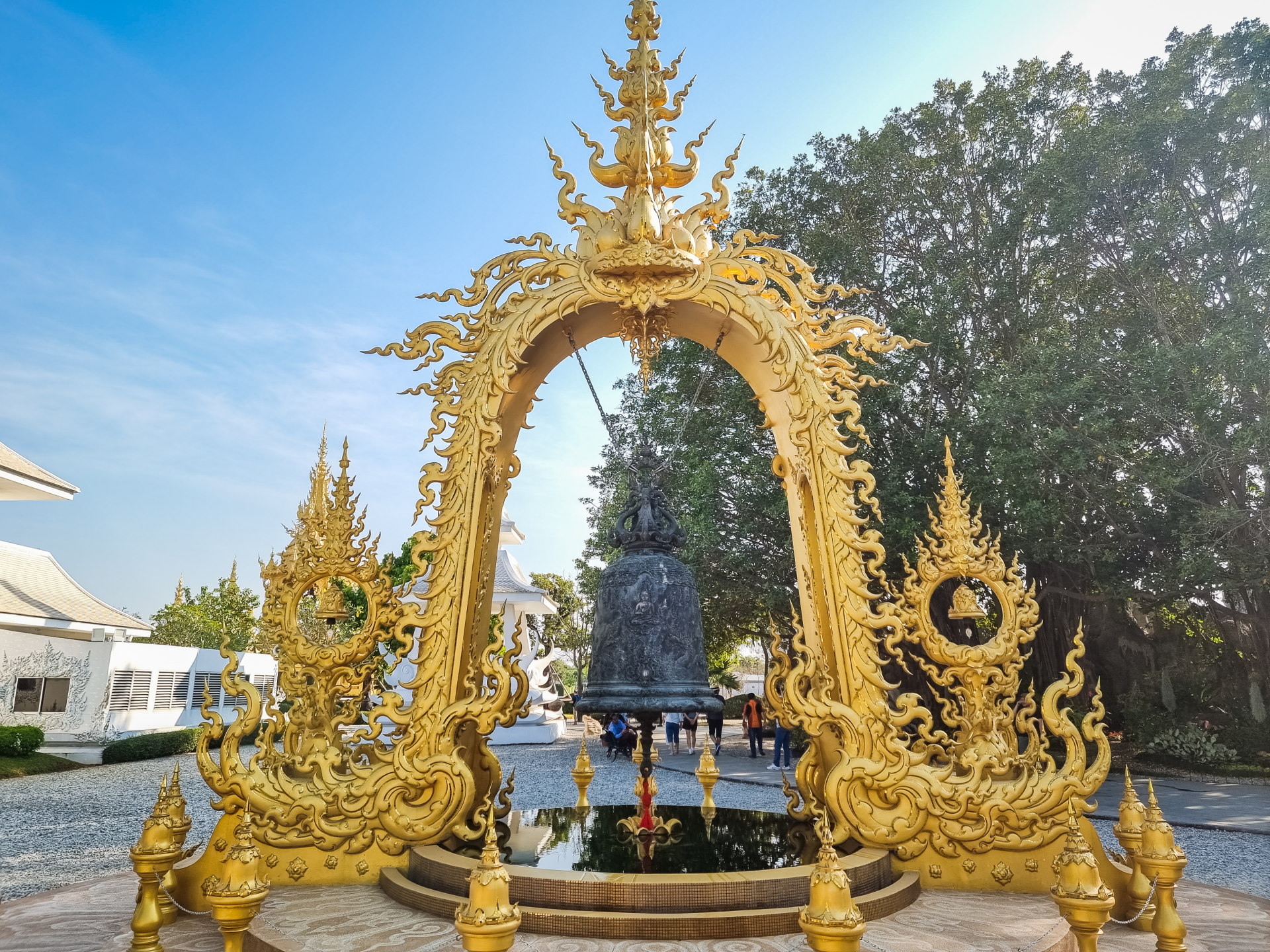
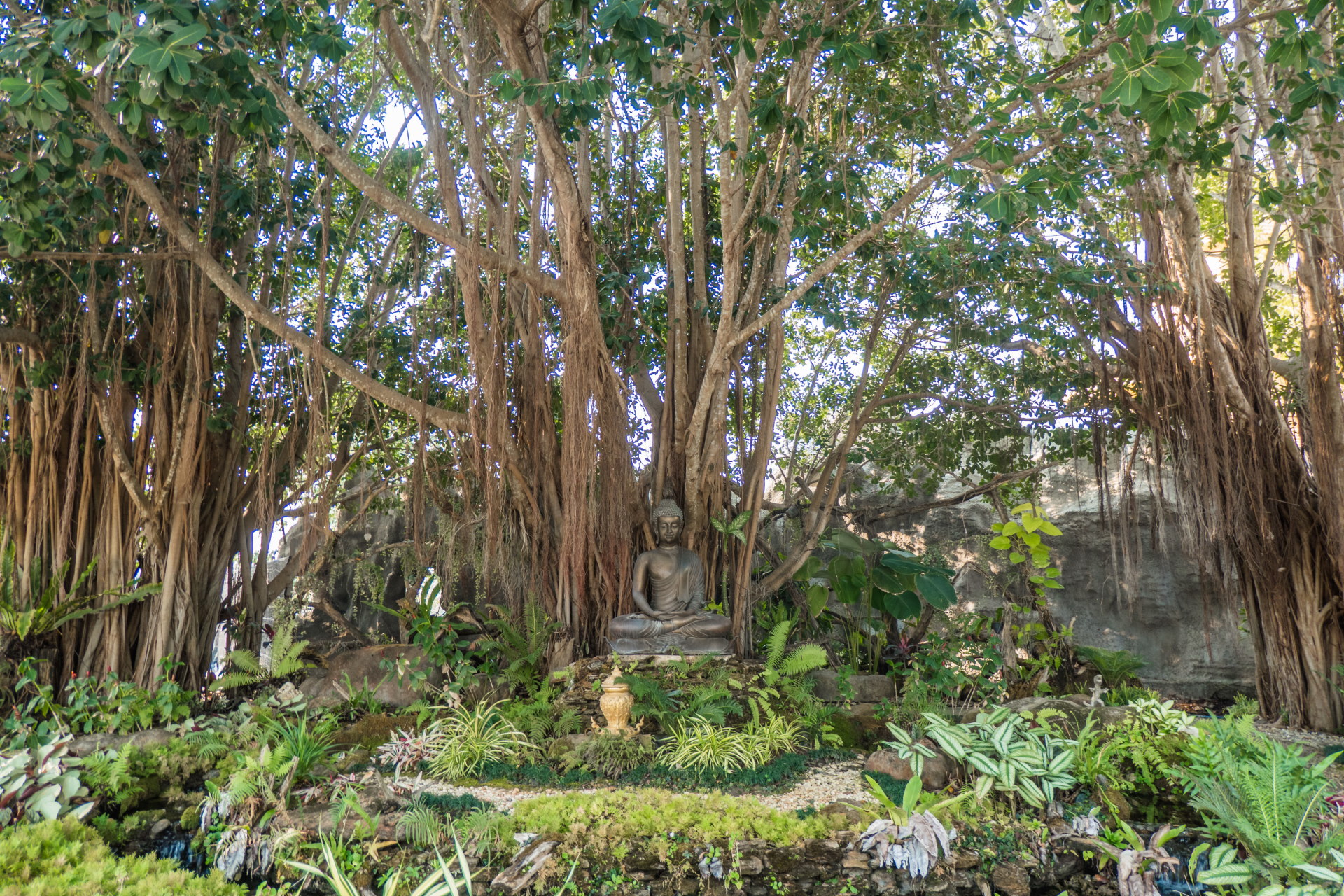
Just before the Cave of Art, you'll see a bell suspended above a small pool, surrounded by an elegant golden structure. Nearby, a shaded area beneath a banyan tree (a tree with many cascading roots) invites you to pause. A Buddha statue in a meditative pose stands there, offering a moment of serenity in this soothing setting.
Golden Ganesha temple
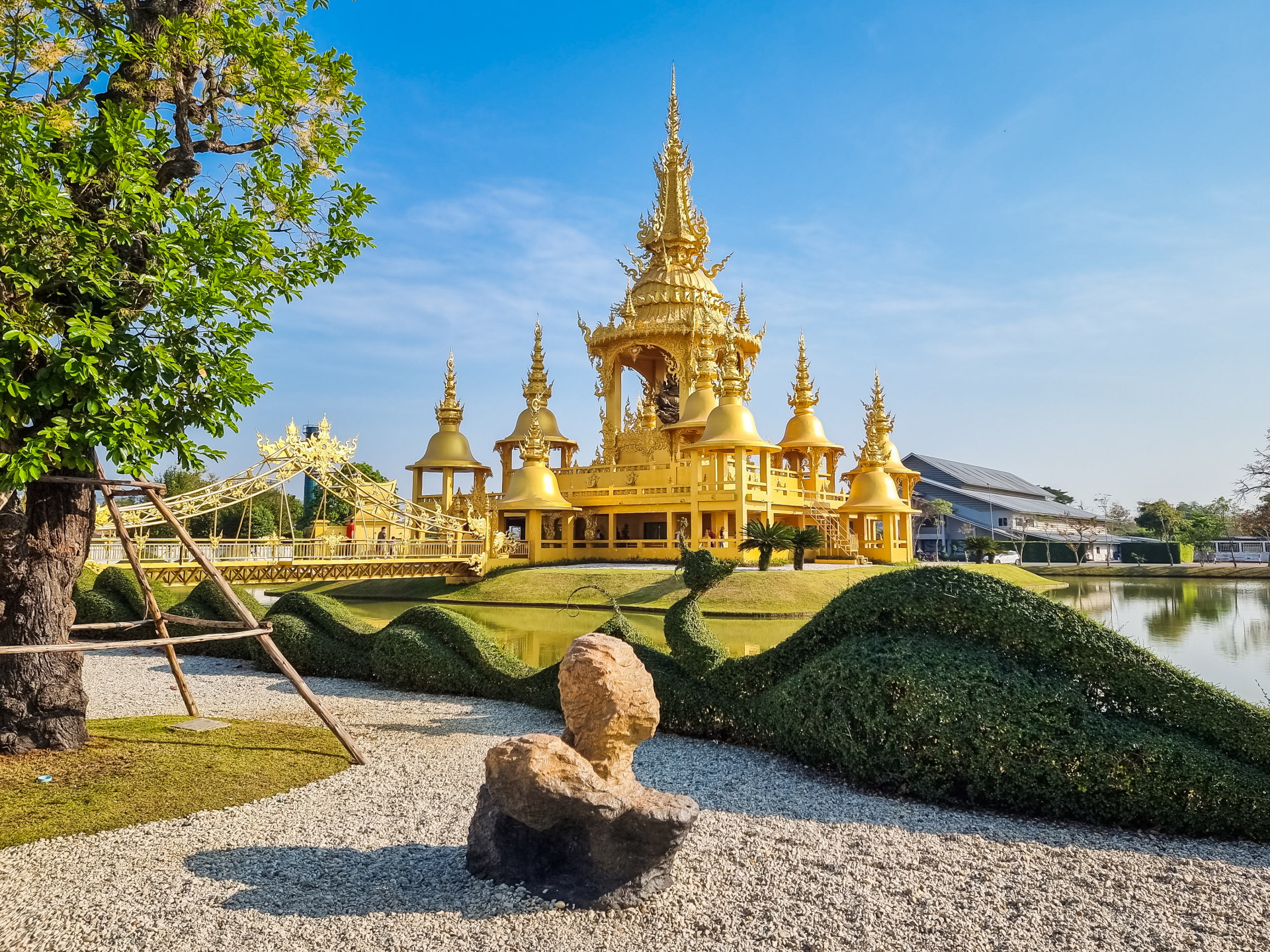
The Golden Ganesha Temple is a separate structure located within the Wat Rong Khun complex. Following the path that continues to the left after the Cave of Art , you will discover this building erected in the middle of an artificial lake. Topped with a bell-shaped roof, it is crowned by a sculpture of an elephant.
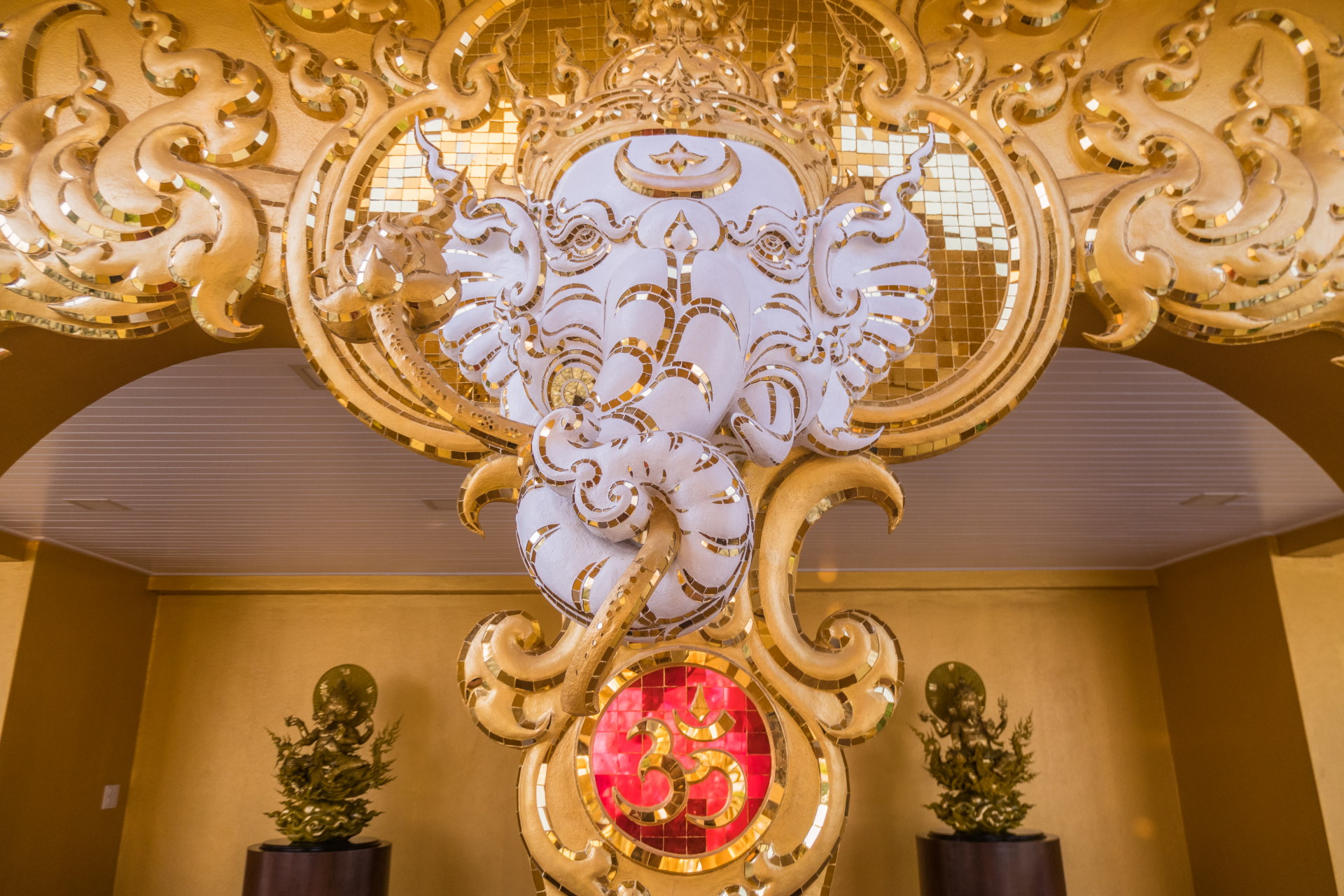
This shrine is dedicated to Ganesh , the Hindu deity well known for his elephant-like appearance, associated with wisdom, prosperity, and success. Although Wat Rong Khun is primarily a Buddhist temple, this inclusion reflects the influence of Hinduism on Buddhism in the region.
While the level of detailing does not yet match that of the Ubosot, one can easily imagine that this construction, once completed, will be just as graceful as the rest of the complex.
What you can see there:
- Golden statue of Ganesh :
In front of the temple, you can see up close a magnificent golden statue of Ganesh, adorned with intricate details. In contrast to the pristine white of the Ubosot, this shrine adopts a bright golden palette, symbolizing wealth and prosperity. - Exhibition room :
Inside, you will find an exhibition of amulets engraved with the image of Ganesh, as well as some statuettes for sale. If you are looking for a little freshness, the room is air-conditioned, which can be welcome on hot days.
The shrine is located away from the busier areas of the main complex, making it a peaceful place for a contemplative break away from the hustle and bustle.

Symbolism:
Ganesh is particularly revered in Thailand for his ability to remove obstacles and bring good luck and prosperity. An altar dedicated to Ganesh is often found in Thai homes, similar to spaces dedicated to Buddha.
The Golden Ganesha Temple creates an interesting contrast with the golden building housing the toilets, which symbolizes material and frivolous desires. Here, gold takes on a more spiritual connotation, associated with divine grandeur and prosperity.
Around the meditation rooms
As you stand facing the golden bridge leading to the temple dedicated to Ganesha, you'll notice a white building , decorated in Chalermchai's distinctive style. This building is actually a crematorium . While I don't know if it's still in use, it's interesting to note that Chalermchai included this traditional structure, commonly found in classic Thai temples.

On the left, another building houses meditation rooms , offering a quiet space for those who wish to immerse themselves in the spirituality of the place. On the right, you will find a passage under a building that leads you back to the vicinity of the wishing well.
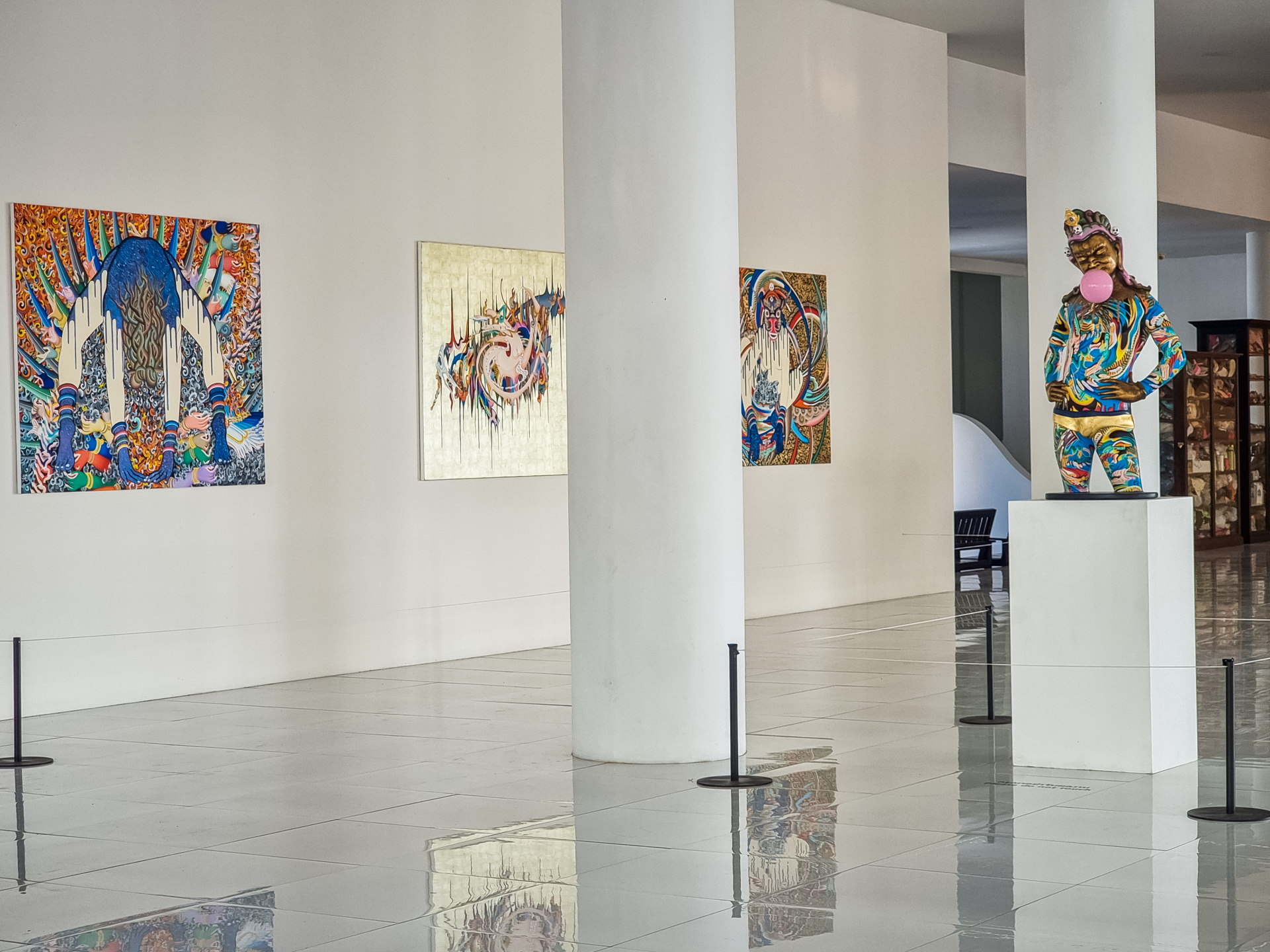
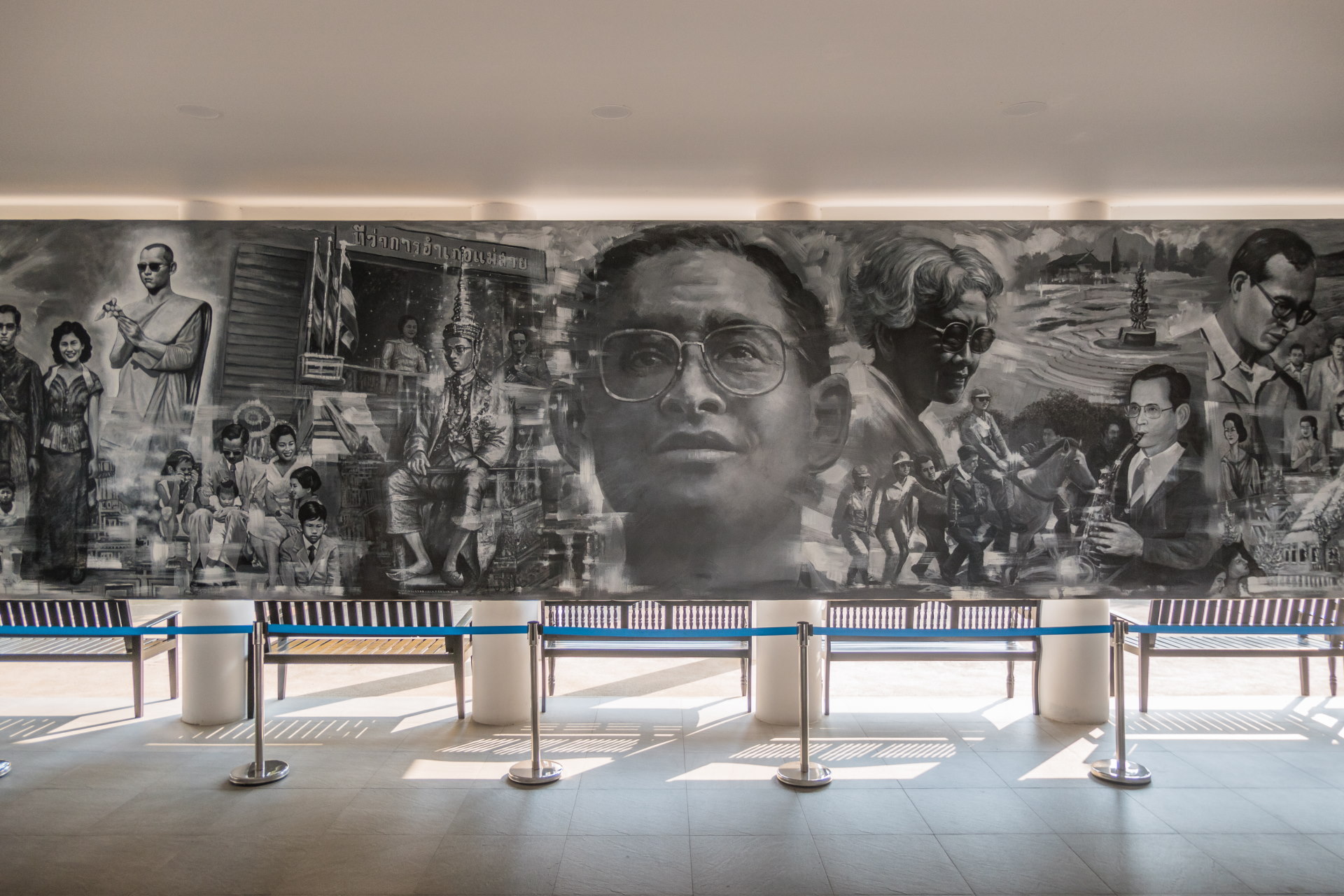
Beneath this passageway are usually displayed works by other artists, notably the one behind another Chiang Rai attraction (the Baan Dam Museum). There is also a large mural dedicated to the life of King Rama IX , who died in 2016. This tribute, commissioned by Chalermchai, reflects the monarch's importance in contemporary Thai history and the impact he had.
Around the temple
Wat Rong Khun is such an attraction today that an entire economy has formed around the temple. You will therefore find somewhere to eat, sit in a café or do a little shopping in one of the souvenir shops opposite the white temple.
But there is at least one place you should take a look before you leave.
Chalermchai Kositpipat Museum
In the immediate vicinity of Wat Rong Khun, you can also visit the museum dedicated to the artist, called the Chalermchai Kositpipat Hall of Masterwork . This gallery allows you to immerse yourself in the artist's creative world and discover the evolution of his unique style.
It features a large collection of his works, from his first paintings made at the age of 14 to more recent creations. This tour traces the emergence of his very particular style, mixing religious symbolism and representations of power. In parallel, you can admire some of his sculptures, amulets, and paintings in more classical styles, including a captivating series illustrating destinations he visited and interpreted in painting.

The gallery also has some surprises in store, with unexpected and sometimes surprising works at the end of the tour. It doesn't cost anything to take a look, especially since admission is free. Some of the paintings are really worth the detour, and it's a great way to enrich your visit to the White Temple while deepening your understanding of Chalermchai's vision.
One last surprise…
Wat Rong Khun is a temple that never lets itself be completely discovered, even after several visits. As proof, one day, I noticed a strange activity near the entrance: open trapdoors and busy workers. Intrigued, I thought at the time that it was maintenance work, perhaps for the water in the basins.
But in reality, they were oyster farms ! Was it to harvest pearls and mother-of-pearl? Probably, but who knows! This temple, it seems, always has its share of surprises.

When to go to the White Temple?
The White Temple can be visited year-round, but be aware of the heat and fires between February and April, and the particularly heavy rains in July and August. October is significantly drier in Chiang Rai and shouldn't be ruled out.

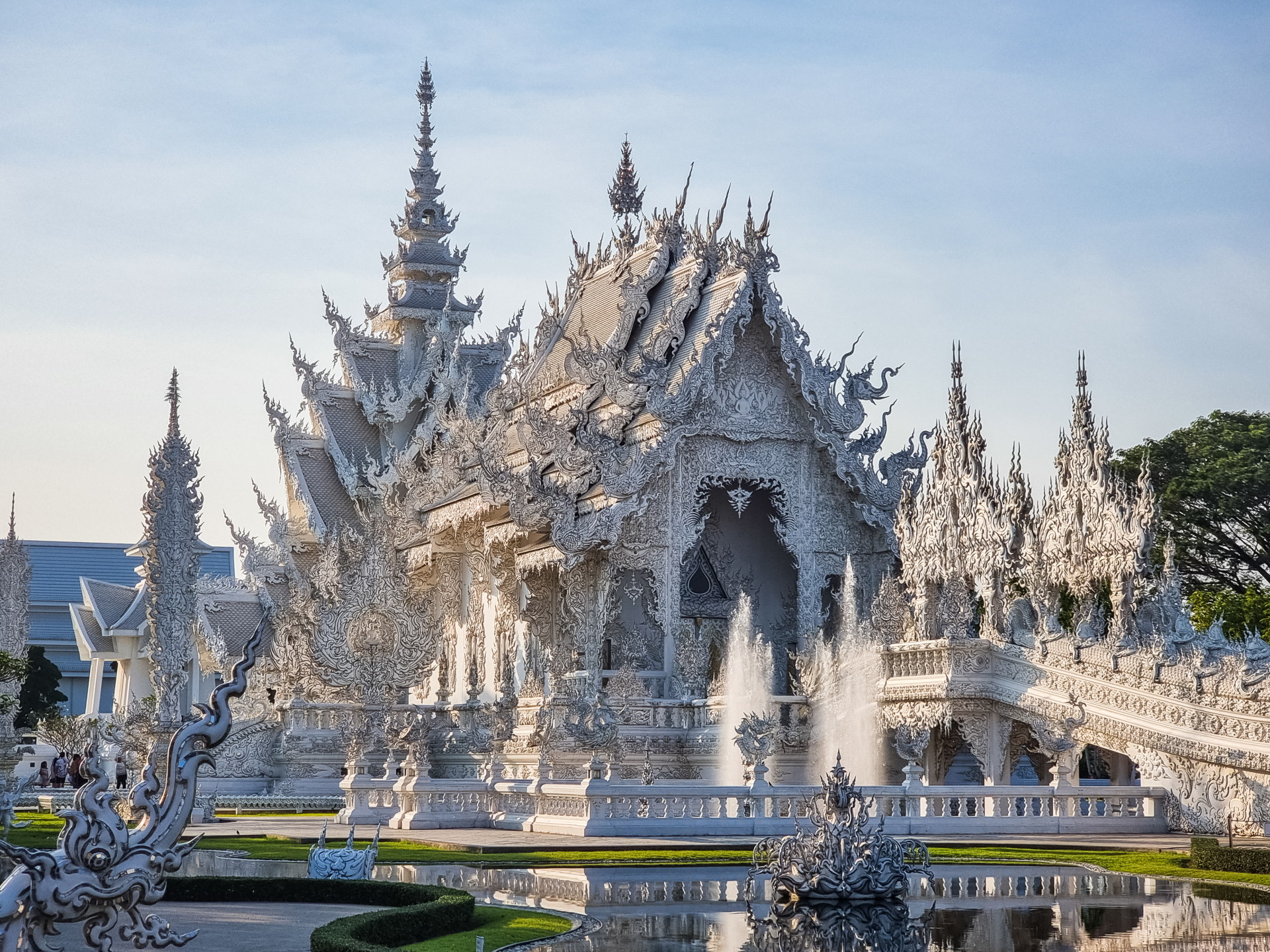
For me, the ideal month remains November , when you can admire the deep blue skies, like in some of the photos in this article. It's also the rice harvest season, which brings beautiful colors to the landscape.
- February to April : This period combines intense heat, peak drought (making nature dull), and agricultural burning which causes significant air pollution, especially in February and March.
- May to August With the arrival of May, the rainy season begins again, and nature becomes lush once more. June typically sees a relative lull, then the rains intensify in July, reaching their peak in August. Visits are still possible between downpours. The rice paddies, meanwhile, are replanted starting in July.
- September and October September remains wet, but October marks a marked decrease in rainfall. The landscapes are still green and showers are still possible, although these two months do not correspond to the peak of the monsoon.
Best times to avoid the crowds
- Early morning (at opening) : Ideal for arriving before the day tour groups from Chiang Rai.
- Late afternoon (after 16:00) : A great option to avoid the crowds and enjoy a quieter atmosphere and benefit from a beautiful soft light at sunset, perfect for photos.
Overall, late morning and afternoon can be the busiest times, due to organized excursions from Chiang Rai and also from Chiang Mai.
How to get to the white temple
From Chiang Rai
Wat Rong Khun is located on National Highway No. 1 (Phahonyothin Road), approximately 13 kilometers southwest of Chiang Rai . Regardless of the mode of transport chosen, the journey from the city center takes about 20 minutes.
— Budget option : From Chiang Rai's old bus station, located right next to the night bazaar, you can take a shared taxi (songthaew) . The ride costs approximately 20 Baht per person.
— Comfortable option : You can opt for an air-conditioned taxi (blue and yellow) or hire a private songthaew . Expect to pay between 250 and 300 Baht each way. Most hotels in Chiang Rai offer to arrange this service for you.
→ If you are staying there, my guide to Chiang Rai and its surroundings includes other sites to see in the region.

Visiting the White Temple from Chiang Mai
Despite the distance of 175 km, or more than three hours by road, it is common to visit it on a day trip from Chiang Mai. These tours usually combine the White Temple with the Blue Temple and sometimes with Baan Dam or the Golden Triangle.
This is a practical solution if you do not plan to stay in Chiang Rai, but expect a long day, often between 12 and 14 hours.
Map: Parking + points of interest
If you are arriving by car, free parking is available to the right of the temple. Please note, I am not referring to the parking lot directly across the road, which is often crowded with minivans and tourist buses.
This one is more discreet: you have to take the first road on the right, just before arriving at the main entrance of the temple.
For your convenience, I have prepared a map showing the points of interest mentioned in this article, some recommendations for eating nearby, and of course, the exact location of the parking lot.
If you are staying in Chiang Rai rather than making a round trip from Chiang Mai, here are my tips for planning a two or three day stop in Chiang Rai , including transport and areas to sleep in.
Enjoyed this article? Save it on Pinterest!

